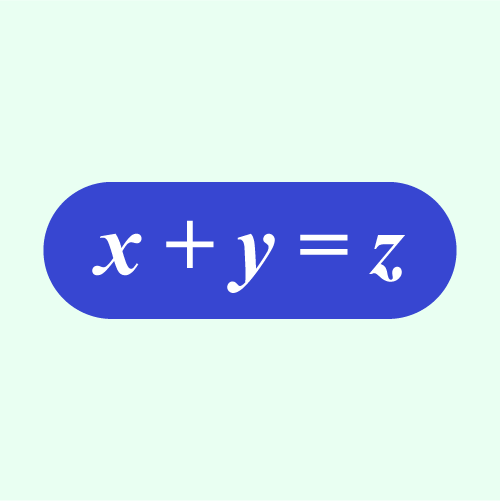
In this chapter, we will be learning about linear equations. Linear equations are equations that have variables raised to the power of 1. We will start by identifying linear equations in one variable and understanding their characteristics. We will also learn how to form linear equations in one variable based on a statement or situation, and vice versa.
Next, we will move on to linear equations in two variables. We will learn how to identify these equations and describe their characteristics. We will also learn how to form linear equations in two variables based on a statement or situation, and vice versa.
Lastly, we will study simultaneous linear equations in two variables. We will learn how to form these equations based on daily situations and represent them graphically. We will also learn different methods to solve simultaneous linear equations in two variables.
By the end of this chapter, we will have a good understanding of linear equations and how to work with them in one and two variables.
• Identify linear equations in one variable and describe the characteristics of the equations.
• Form linear equations in one variable based on a statement or a situation, and vice-versa.
• Solve linear equations in one variable.
• Solve problems involving linear equations in one variable.
• Identify linear equations in two variables and describe the characteristics of the equations.
• Form linear equations in two variables based on a statement or a situation, and vice-versa.
• Determine and explain possible solutions of linear equations in two variables.
• Represent graphically the linear equations in two variables.
• Form simultaneous linear equations based on daily situations. Hence, represent graphically the simultaneous linear equations in two variables and explain the meaning of simultaneous linear equations.
• Solve simultaneous linear equations in two variables using various methods.
• Solve problems involving simultaneous linear equations in two variables.

There is no chapter or topic to show