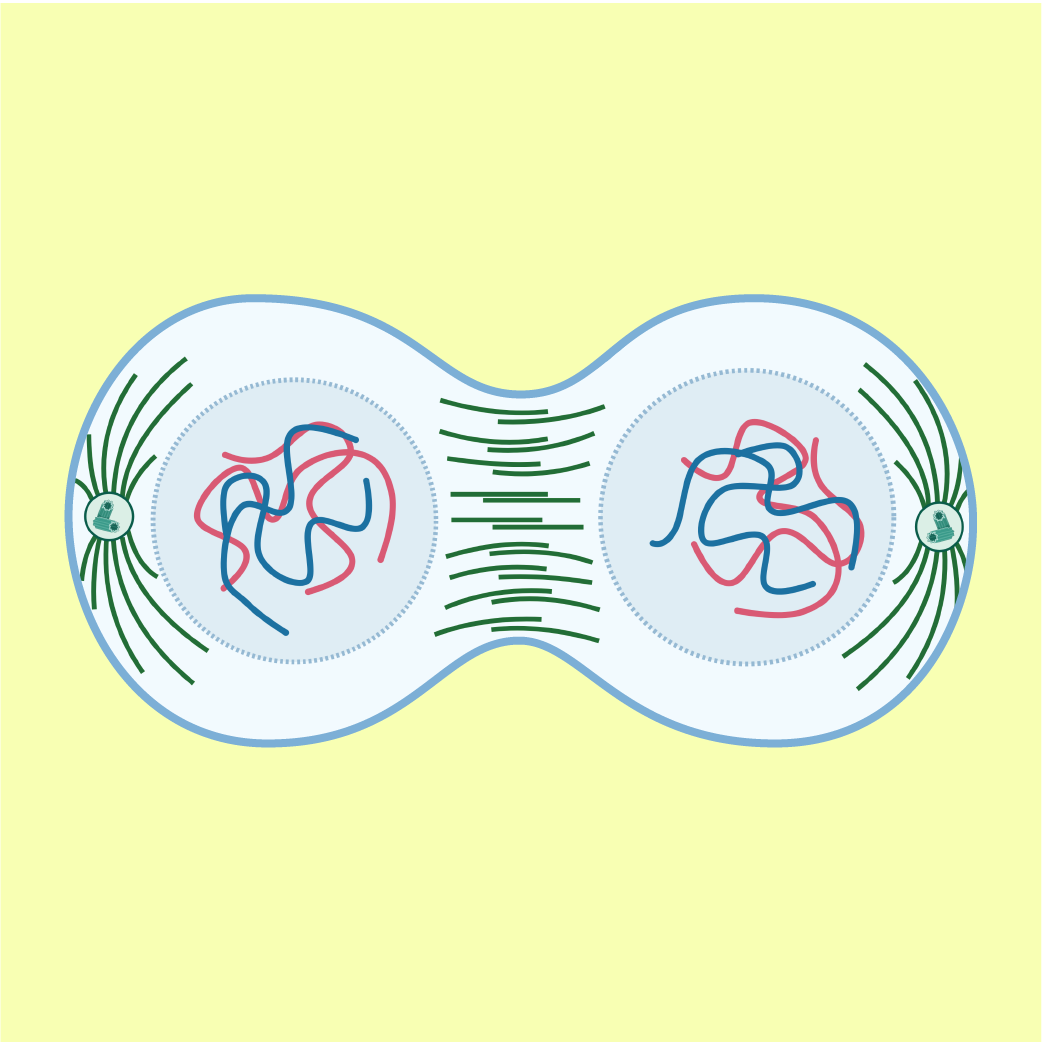
In this chapter, we are going to learn about cell division. We will be able to describe karyokinesis, which is the division of the nucleus, and cytokinesis, which is the division of the cytoplasm. We will also learn about terms such as haploid, diploid, chromatin, homologous chromosomes, paternal chromosome, and maternal chromosome. Next, we will study the cell cycle and mitosis. We will learn about the different phases of the cell cycle, including interphase, G1 phase, S phase, G2 phase, M phase, mitosis, and cytokinesis. We will also arrange the stages of mitosis in the correct order. Moving on, we will explore meiosis. We will understand the meaning of meiosis and identify the types of cells that undergo meiosis. Lastly, we will discuss the issues of cell division on human health. We will explain the effects of abnormal mitosis on human health, such as tumours and cancer. We will also evaluate the effects of abnormal meiosis on individuals with Down Syndrome. By studying this chapter, we will gain a better understanding of cell division and its importance in biology and human health.
• Describe: (i) karyokinesis (nuclear division). (ii) cytokinesis (cytoplasmic division)
• Describe the terms haploid, diploid, chromatin, homologous chromosomes, paternal chromosome and maternal chromosome
• Describe the phases in a cell cycle: (i) interphase. (ii) G1 phase. (iii) S phase. (iv) G2 phase. (v) M phase. (vi) mitosis. (vii) cytokinesis
• Arrange the stages of mitosis in the correct order
• Communicate about the cell structure of each stage of mitosis and cytokinesis by using labelled diagrams
• Compare and contrast mitosis and cytokinesis in animal and plant cells
• Discuss the necessity of mitosis in: (i) development of embryo. (ii) growth of organisms. (iii) healing of wounds on the skin. (iv) regeneration. (v) asexual reproduction
• State the meaning of meiosis
• Identify types of cells that undergo meiosis
• State the necessity of meoisis in: (i) the formation of gametes. (gametogenesis). (ii) producing genetic variation. (iii) maintaining diploid chromosomal numbers from one generation to another
• Explain the stages of meiosis in the correct order: (i) Meiosis I. (ii) Meiosis I
• Draw and label the cell structure in each stage of meiosis I, meiosis II and cytokinesis
• Compare and contrast meiosis and mitosis
• Explain the effects of abnormal mitosis on human health: (i) tumour. (ii) cancer
• Evaluate the effects of abnormal meiosis on Down Syndrome individuals

There is no chapter or topic to show