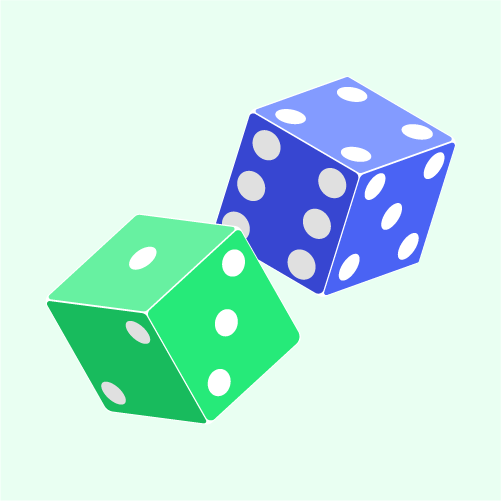
In this chapter, we will be learning about simple probability. We will start by conducting simple probability experiments and finding the experimental probability of an event. We will also learn how to make conclusions about the experimental probability when we have a large number of trials.
Next, we will explore probability theory involving equally likely outcomes. We will understand how to calculate the probability of an event when all outcomes are equally likely.
We will also learn about the probability of the complement of an event. This means finding the probability of an event not happening.
Lastly, we will focus on determining the sample space and events of an experiment. We will construct probability models for events and understand the connection between theoretical probability and experimental probability.
• Perform simple probability experiments, and hence state the ratio frequency of an event and number of trials as the experimental probability of an event
• Make conclusions about the experimental probability of an event when the number of trials are large enough
• Determine the sample space and events of an experiment
• Construct probability models for an event, and hence make connection between theoretical probability and experimental probability
• Determine the probability of an event
• Describe the complement of an event in words and by using set notations
• Determine the probability of the complement of an event
• Solve problems involving the probability of an event

There is no chapter or topic to show