
6.8Salts, Crystals and Their Uses in Daily Life
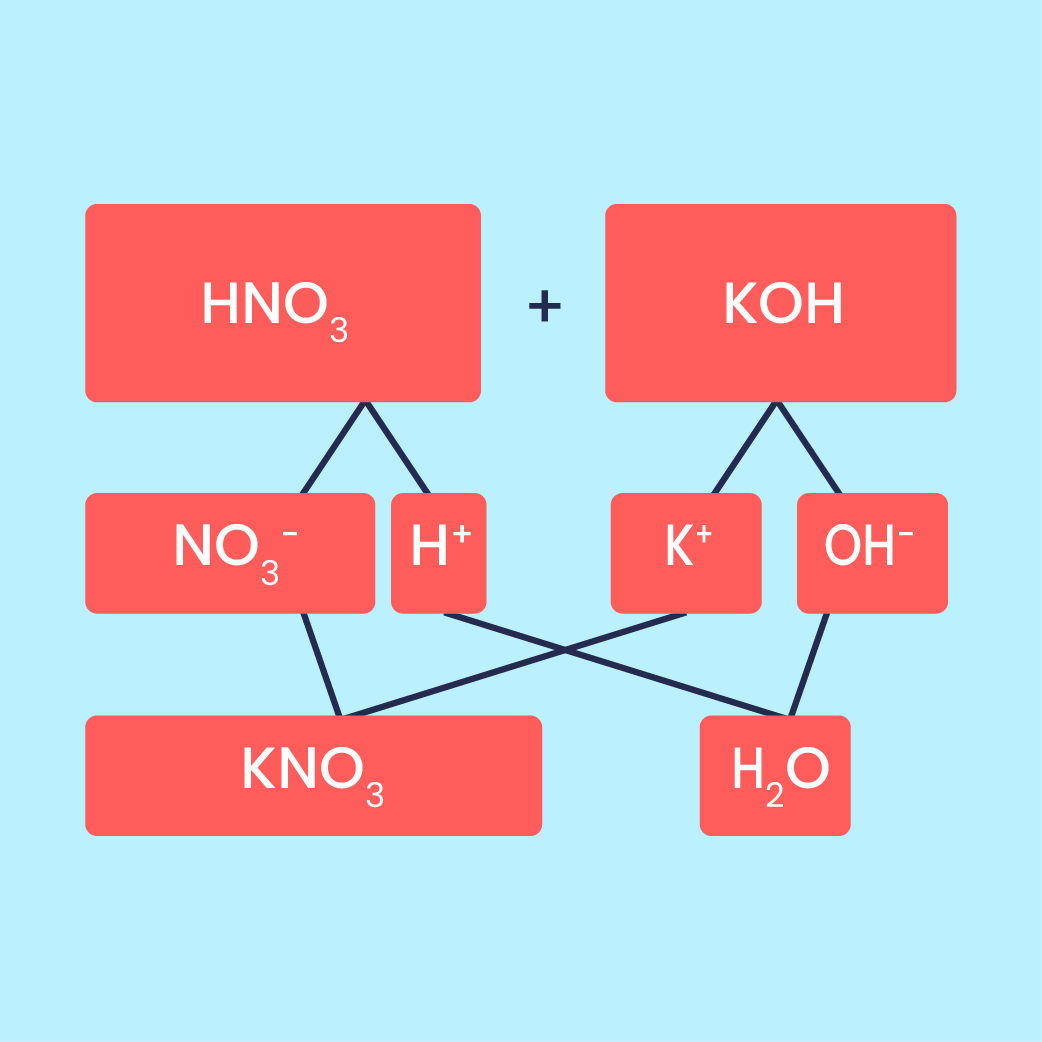
In everyday language, salt usually refers to the table salt used in cooking. In chemistry, however, salt is a broad category of ionic compounds formed from acids. Salts exist naturally as minerals in the Earth's crust and form distinctive crystalline structures with well-defined geometric shapes. They play vital roles across numerous sectors, including agriculture, medicine, food preparation, and preservation.
Learning Objectives
- State the meaning of salt.
- Characterise the physical properties of salt crystals.
- Give examples of salt and their uses in daily life.
Physical Properties and Daily Uses of Salts
Salt crystals have regular geometric shapes and are used across agriculture, medicine, food preparation and preservation.
Crystal Characteristics
- Flat surfaces, straight sides and sharp vertices
- Specific geometrical shape: cube, cuboid, rhombus or prism
- Fixed angle between two adjacent surfaces
- Different crystals have different geometrical shapes
- Crystals of the same substance keep the same shape even when sizes differ
Why Crystals Form
Salt crystals have distinct physical properties because their particles are arranged in a compact and orderly manner according to a specific design arrangement.
Brief Explanation
Understand the meaning of salt and how salt crystals form.
1. Acid + Alkali
\[\text{HCl(aq)} + \text{NaOH(aq)} \rightarrow \text{NaCl(aq)} + \text{H}_2\text{O(l)}\]
Anion from acid, cation from base → Sodium chloride salt.
2. Acid + Reactive Metal
\[2\text{HCl(aq)} + \text{Zn(s)} \rightarrow \text{ZnCl}_2\text{(aq)} + \text{H}_2\text{(g)}\]
Anion from acid, cation from metal → Zinc chloride salt.
3. Acid + Metal Carbonate
\[2\text{HCl(aq)} + \text{CaCO}_3\text{(s)} \rightarrow \text{CaCl}_2\text{(aq)} + \text{CO}_2\text{(g)} + \text{H}_2\text{O(l)}\]
Anion from acid, cation from metal carbonate → Calcium chloride salt.
4. Acid + Aqueous Ammonia
\[\text{HCl(aq)} + \text{NH}_3\text{(aq)} \rightarrow \text{NH}_4\text{Cl(aq)}\]
Anion from acid, cation from aqueous ammonia → Ammonium chloride salt.
| Sector | Salt | Use |
|---|---|---|
| Agriculture | Ammonium nitrate, \(\text{NH}_4\text{NO}_3\) | Fertiliser |
| Agriculture | Iron(II) sulphate, \(\text{FeSO}_4\) | Pesticide to kill pests and grass |
| Medicine | Calcium sulphate, \(\text{CaSO}_4\) | Plaster of Paris to support broken bones |
| Medicine | Potassium manganate(VII) | Antiseptic to treat wounds |
| Food Preparation | Sodium chloride, \(\text{NaCl}\) | Flavouring |
| Food Preparation | Sodium bicarbonate, \(\text{NaHCO}_3\) | Raising agent for dough |
| Food Preservation | Sodium benzoate, \(\text{C}_6\text{H}_5\text{COONa}\) | Preserve chilli sauce, tomato sauce and oyster sauce |
| Food Preservation | Sodium nitrate, \(\text{NaNO}_3\) | Preserve processed meats such as sausages |
Try These Questions First
Answer mentally, then check the explanation.
What is the definition of a salt based on its chemical composition?
Why do salt crystals possess fixed geometrical shapes and sharp vertices?
State the name and function of one salt used in agriculture and one salt used in food preservation.
Common Mistakes
Avoid these errors when learning about salts.
Common Misconceptions
Compare each misconception with the correct fact.
All salts must be soluble and consumable like table salt.
Many salts are insoluble (such as calcium carbonate in eggshells) or toxic, and only specific non-toxic salts are suitable for consumption or food preparation.
Changing the size of a growing crystal changes its characteristic interfacial angles.
Regardless of overall size, the angle between two adjacent surfaces on the crystal remains fixed for a given salt.
Summary
Key facts to remember.
- A salt is an ionic compound formed when the \(\text{H}^+\) ion of an acid is replaced by a metal ion or an ammonium ion, \(\text{NH}_4^+\).
- Salts can be produced by reacting acids with alkalis, reactive metals, metal carbonates, or aqueous ammonia.
- Salt crystals have flat surfaces, straight edges, sharp vertices, fixed interfacial angles, and definite geometric shapes because their particles are arranged in a compact and orderly lattice.
- Crystals of the same salt share the same geometric shape even when their sizes differ.
- Salts have critical daily uses in agriculture, medicine, food preparation, and preservation.
Quick Activity
Complete all parts before checking your score.
A. Objective Quiz
Which of the following is the correct definition of a salt?
Which salt is correctly paired with its function?
B. Fill in the Blanks
A crystal has specific physical properties because its particles are arranged in a compact and ______ manner according to a specific design arrangement.
The chemical formula of the salt used to raise dough in baking is ______.
C. Match the Salt with Its Daily Life Use
Drag each salt on desktop. On mobile, tap a salt and then tap the matching box.
Salt
Ammonium nitrate Calcium sulphate Sodium benzoate Potassium manganate(VII)Daily Life Use
Keywords
Tap or hover over a term to read its meaning.


