
| 9.2 | Space Weather |
| Definition |
|
Space weather refers to the environmental conditions in the magnetosphere, ionosphere, and thermosphere as a result of activity occurring on the surface of the Sun (influenced by the solar wind) |
The effects of space weather on activity on Earth:
| Aurora | |
|
Aurora is a colorful light at night in the north pole and south pole - When the Sun is active, many charged particles are released and trapped in the Earth’s magnetic field - Charged particles are carried by the Earth's magnetic field to the north and south poles and collisions occur and interact with nitrogen and oxygen in the upper atmosphere - This interaction produces green, blue, and red lights - The aurora in the northern hemisphere is called the aurora borealis - The aurora in the southern hemisphere is called the aurora australis |
|
|
Telecommunication interference |
|
|
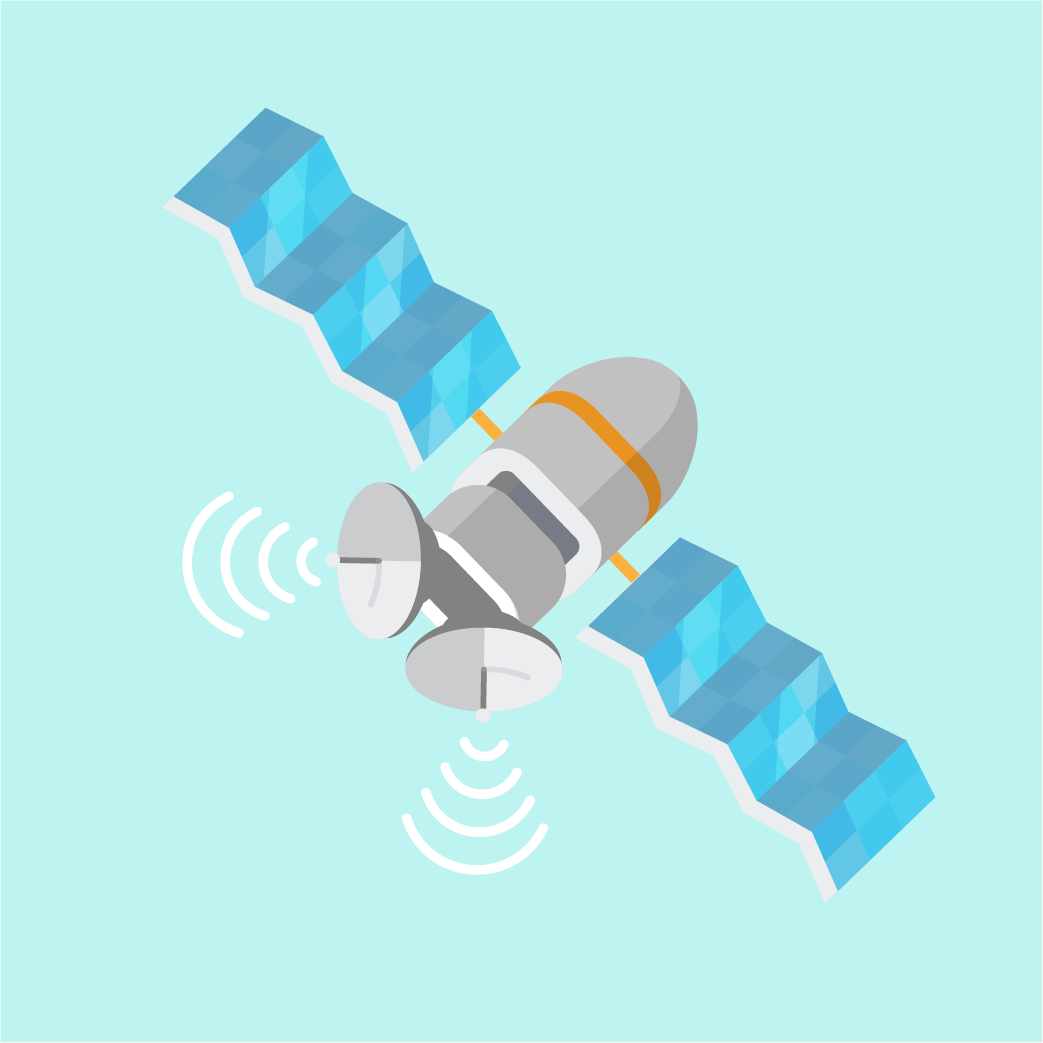
- The ionosphere is the layer of the atmosphere that serves to reflect radio waves in communication - Geomagnetic storms are temporary disturbances of the Earth’s magnetosphere caused by solar winds or strong radiation eruptions - Electrically charged particles from the Sun enter the ionosphere near the Earth's magnetic poles and ionize the molecules to form electrons and positive ions - This increase in the number of electrons causes the ionosphere to absorb radio waves in the polar regions of the Earth and causes radio interference - These electrically charged particles also interfere with cell phone waves, communication satellites, and aviation radio communication interference |
|
|
Navigation system interference |
|
|
- Interference in the ionosphere can also reduce the accuracy of navigation systems (GPS) used by ships, aircraft and land vehicles - Due to the varying electron densities in the ionosphere as a result of geomagnetic storms - Affects media and telecommunications satellites and can also suffer damage if exposed to radiation |
|
|
Grid power line interference |
|
|
- Geomagnetic storms can cause high electrical currents in long conductors such as power lines (electrical cables) - Excessive current will melt the transformer causing damage to the power line system and causing power outage - The strongest solar flare in history was recorded in 1859, the Carrington Event of 1859 - The Carrington incident of 1859 damaged the telegraph system in use at the time |
Interpret space weather data:
-
The space weather depends on the solar cycle
-
Calculating the number of sunspots can track the solar cycle
-
The beginning of the solar cycle is known as the minimum solar that has the least number of sunspots
-
The middle of the solar cycle is known as the maximum solar that has the most number of sunspots
