

| 3.3 | Human Blood |
| Definition |
|
Human blood consists of two components, namely 55% blood plasma (pale yellow fluid) and 45% blood cells (red blood cells, white blood cells and platelets) |
The structure and function of red blood cells, white blood cells, and platelets:

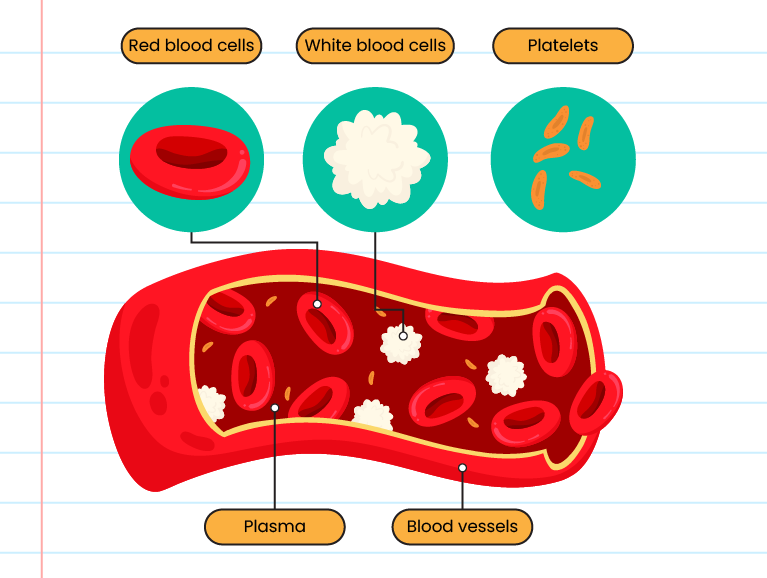
The chemicals and their functions:
|
Chemical substance |
Function |
|
Water |
Water becomes a transport medium and solvent for respiratory gases, ions, digestive products, and excrement |
|
Nutrients (glucose and vitamins) |
Nutrients are important in energy production, growth, and health maintenance |
|
Dissolved gas |
Oxygen is used in cellular respiration and carbon dioxide is the result of cellular respiration |
|
Wastes substances |
Wastes such as urea are transported to the kidneys for elimination |
|
Enzymes |
Enzymes are needed to speed up biochemical reactions in cells |
|
Hormones |
Hormones are chemicals that regulate the activity of certain tissues or organs |
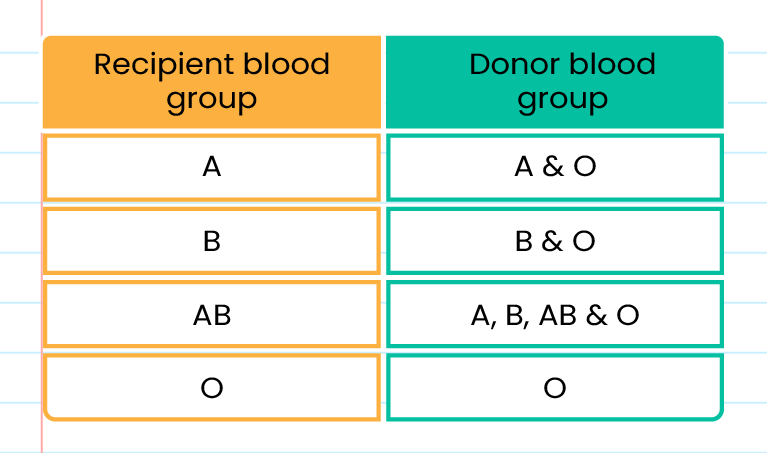
The blood group and suitability of blood reception:

-
Blood group O is known as the universal donor while blood group AB is known as the universal recipient
-
Blood transfusion/blood transfusion should be done according to the appropriate blood class to prevent blood collection to the recipient
The importance of donating blood:
-
Can save lives and not harm donors
-
Reduce the risk of cancer and heart disease
