

| 3.2 | Blood Circulatory System |
| Definition |
|
A tubular system that has pumps and valves that consist of three components, namely the heart, blood vessels, and blood to ensure blood flow occurs in one direction only |
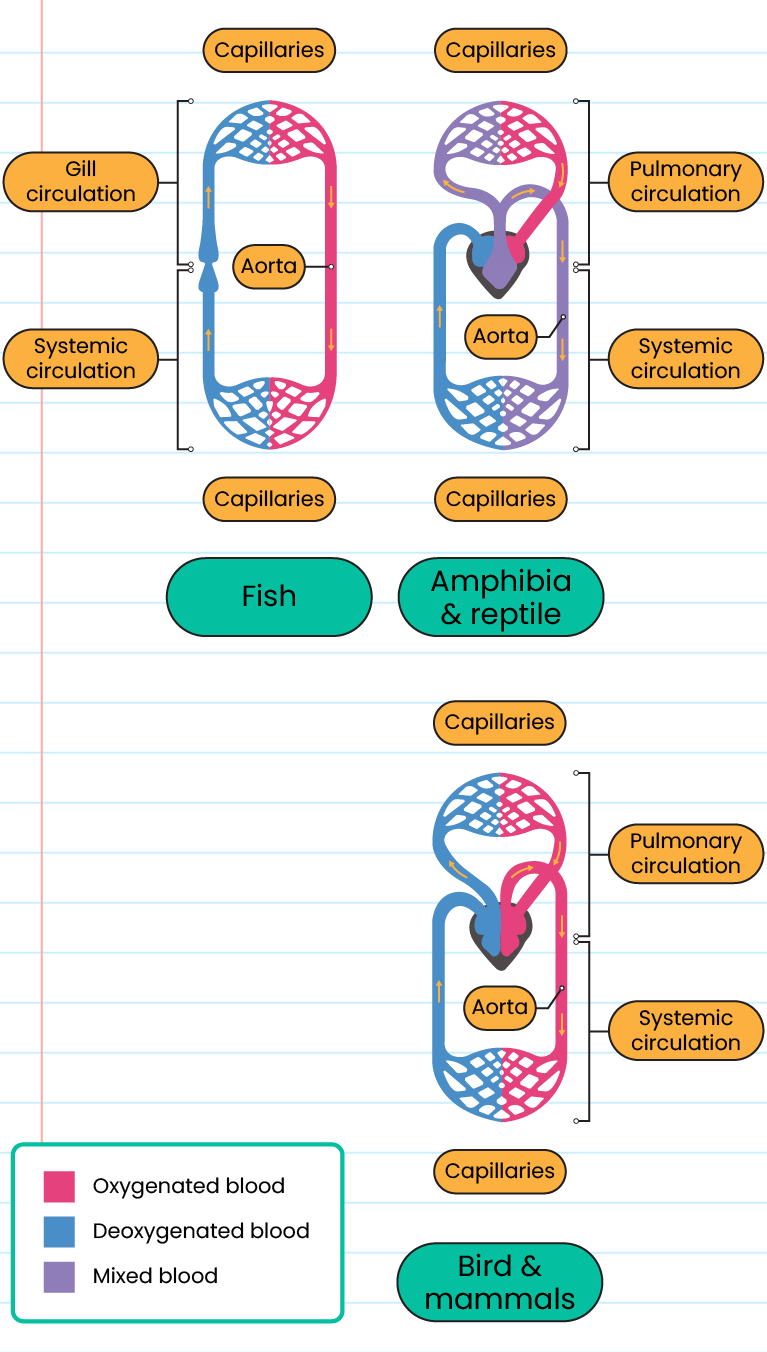
The circulatory system for 3 classes of vertebrates:

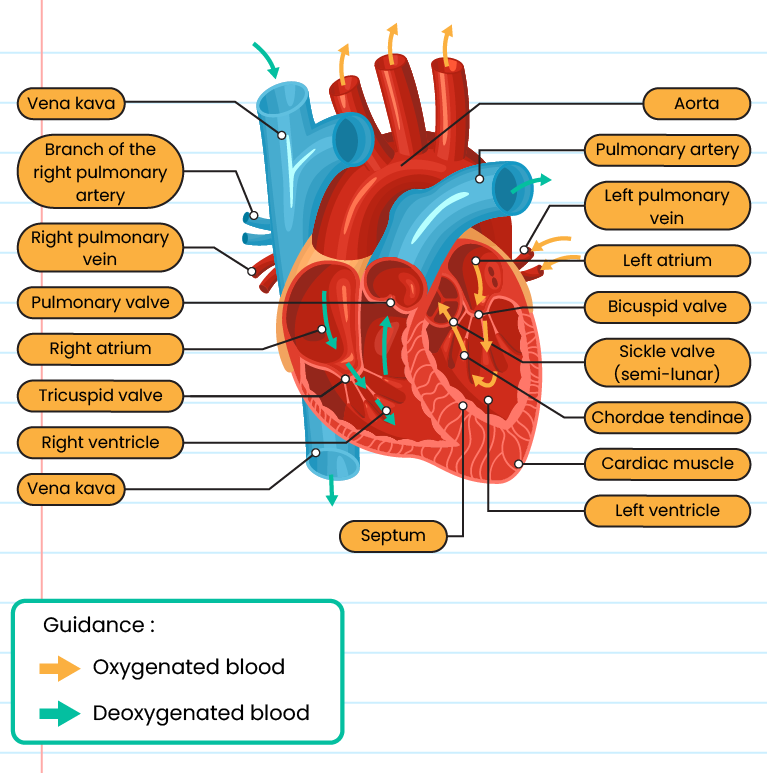
The structure and function of the human heart:

|
Structure |
Function |
|
Left atrium |
Pumping oxygenated blood to the left ventricle |
|
Right atrium |
Pumping deoxygenated blood to the right ventricle |
|
Left ventricle |
Pumps blood to all parts of the body except the lungs |
|
Right ventricle |
Pumping deoxygenated blood from the heart to the lungs |
|
Vena cava |
Carries deoxygenated blood from the rest of the body to the right atrium |
|
Pulmonary artery |
Carries deoxygenated blood from the right ventricle to the lungs |
|
Aorta |
Carries oxygenated blood from the left ventricle to all parts of the body (largest artery) |
|
Pulmonary vein |
Carries oxygenated blood from the lungs to the left atrium |
|
Septum |
Isolate the left chamber and the right chamber of the heart |
|
Tricuspid valve |
Prevents the recirculation of blood from the right ventricle to the right atrium during ventricular contraction |
|
Bicuspid valve |
Prevents the re-flow of blood into the left ventricle from the left atrium during ventricular contraction |
|
Sickle valve |
Prevents the re-flow of blood to the ventricles when the ventricles relax |
The functional efficiency of the human heart:
-
The heart wall is built of cardiac muscle that can contract and relax rhythmically
-
The ventricle has a thicker wall and contracts more strongly than the atrium
-
Has a valve that keeps the blood flowing in one direction only
-
Has a septum that ensures oxygenated blood and deoxygenated blood do not mix
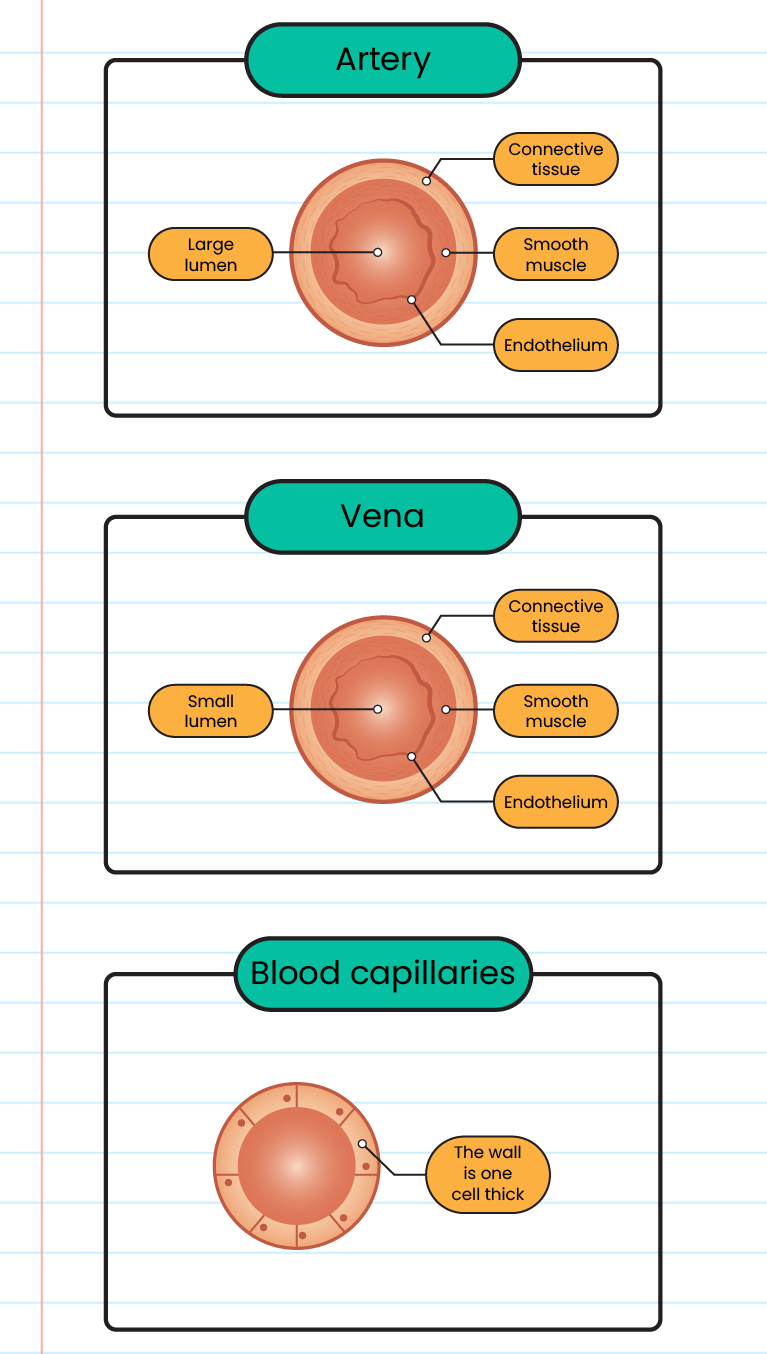
The structure and function of human blood vessels:

|
Types of blood vessels |
Vena |
|
Function |
Brings blood to the heart |
|
Lumen size |
Big |
|
Wall thickness |
- Thin - Less muscular - Less elastic |
|
Valve |
There is |
|
Blood flow |
Slow and under very low pressure |
|
Type of blood transported |
The blood is deoxygenated except the pulmonary veins |
|
Types of blood vessels |
Blood capillaries |
|
Function |
- Connecting arteries and veins - Allows the exchange of substances between the blood and body cells |
|
Lumen size |
Very small |
|
Wall thickness |
The wall is one cell thick |
|
Valve |
None |
|
Blood flow |
Very slow and under very low pressure |
|
Type of blood transported |
Both types of blood is oxygenated and deoxygenated |
|
Types of blood vessels |
Artery |
|
Function |
Bringing blood out of the heart |
|
Lumen size |
Small |
|
Wall thickness |
- Thick - Muscular - Elastic |
|
Valve |
None |
|
Blood flow |
Fast and under very high pressure |
|
Type of blood transported |
Oxygenated blood except for pulmonary arteries |
The human circulatory system:
-
The human circulatory system is a closed tubular system that is pumped throughout the body
-
Double circulatory system
-
Pulmonary circulation - blood is transported from the heart to the lungs and back to the heart
-
Systemic circulation - blood is transported from the heart to other parts of the body (except the lungs) and back to the heart
The blood pressure:
-
The pressure exerted on the walls of blood vessels due to blood circulation
-
Two readings, namely systolic reading (upper number) and diastolic reading (lower number)
|
Systolic readings |
Diastolic readings |
|
|
Low blood pressure |
Under 90 |
Under 60 |
|
Normal |
90 - 120 mmHg |
60 - 80 mmHg |
|
Pre high blood pressure |
120 - 139 mmHg |
80 - 89 mmHg |
|
High blood pressure |
140 - 160 mmHg |
90 - 100 mmHg |
The systole and diastole:
-
When the heart beats, there are two phases namely the diastolic phase and the systolic phase
-
Diastolic phase - the ventricles relax and blood fills the ventricles
-
Systolic phase - the ventricles contract and blood fills the ventricles
-
Lub dub sounds result from closed tricuspid and bicuspid valves (lub) and closed sickle valves (dub)
The factors that affect the heart rate:
|
Gender |
Females have higher pulse rates than males due to small body size and less muscle mass |
|
Age |
The normal pulse rate for adolescents at rest is 75/min and lower for the elderly |
|
Health rates |
Healthy individuals have low pulse rates at rest |
|
Activity fitness |
During vigorous activity, the pulse rate increases |
The cardiac care measures:
-
Reduce salt and sugar in food
-
Control blood pressure and diabetes
-
Exercise regularly at least five times a week
-
Eat vegetables and fruits
