
2.3
Interdependence and Interaction among Organisms, and between Organisms and the Environment
|
2.3 |
Interdependence and Interaction among Organisms, and between Organisms and the Environment |
- Habitat
- The natural surroundings or home of an organism.
- Species
- A group of organisms that have common characteristics and can reproduce to breed offsprings
- Population
- A group of organisms of the same species that live in the same habitat.
- Community
- A few populations of different organisms live together in one habitat and have mutual interaction with one another.
- Ecosystem
- A few communities that live together in one habitat and have mutual interaction with one another, including all the non-living components such as water, air and soil.
- An ecosystem is said to be balanced if the living organisms and non-living components in the environment are in a state of harmony without any external interference.
| Interaction between Organisms |
| Interaction between organisms comprises symbiosis, prey-predator and competition. |
SYMBIOSIS
- Symbiosis happens when two or more organisms of different species live closely together and interact with one another.
- Symbiosis includes mutualism, commensalism and parasitism.
| Mutualism |
|
An interaction that benefits both organisms Example: Lichens are algae and fungi that live together |
| Commensalism |
|
The interaction between two organisms which only benefits one organism without harming or benefitting the other Example: The remora fish (commensal) latches on the shark (host) |
| Parasitism |
|
An interaction that benefits one organism and only and harms the other. The parasite gets benefit and host is harmed. Example: Tapeworm(parasite) that lives in the human intestine(host) |
PREY-PREDATOR
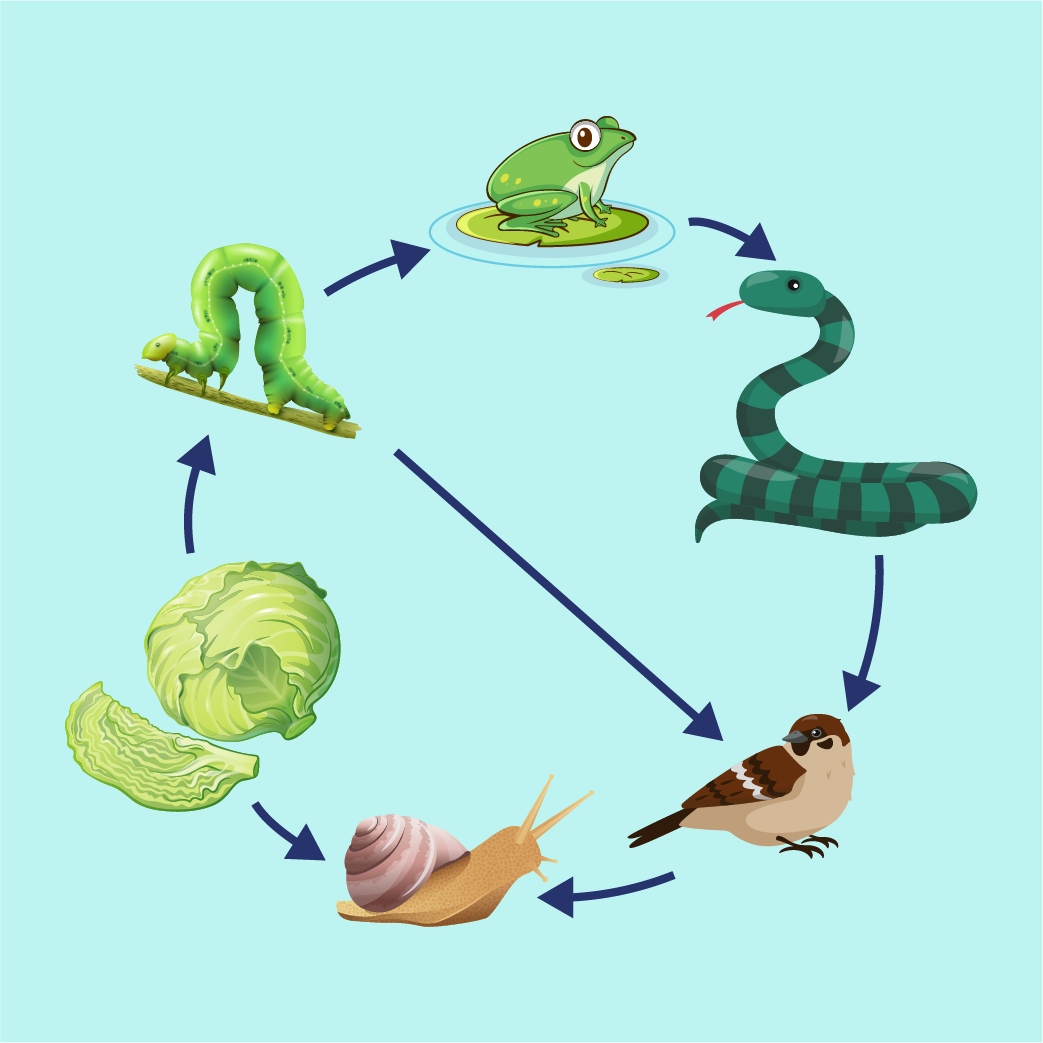
- Involves one organism that eats another organism
- Prey is the organism that is eaten by the predator
- Predator is the organism that hunts another organism for food
- Example : Lion(predator) and deer(prey)
COMPETITION
- Competition happens when organisms in one habitat compete for a limited supply of basic needs such as light, space, water, food and mates
Biological Control
- Biological control is a method that uses organisms that are natural predators or parasites to reduce the number of pests in an area.
- Example: Owls are kept in palm oil plantations to control the population of rats
| Factors that Influence Population Size in an Ecosystem |
| \(\downarrow\) | \(\downarrow\) | \(\downarrow\) | \(\downarrow\) |
| Disease | Presence of predators | Source of food | Change of weather |
Changes in the Ecosystem
- Limited water supply
- Example: Drought season that will upset the paddy field ecosystem
- Migration
- Example: The cattle egret migrates to Kuala Gula from September to April every year.
- As a result, the number of insects decreases as they are eaten by the egrets
- Change in population size
- Example: The increase of pests causes the population of plants to decrease
