

4.7
Plant Reproduction
| 4.7 | Plant Reproduction |
Structure and Functiion of parts of Flowers
 |
Pollination
| Types of flower |
| Unisexual |
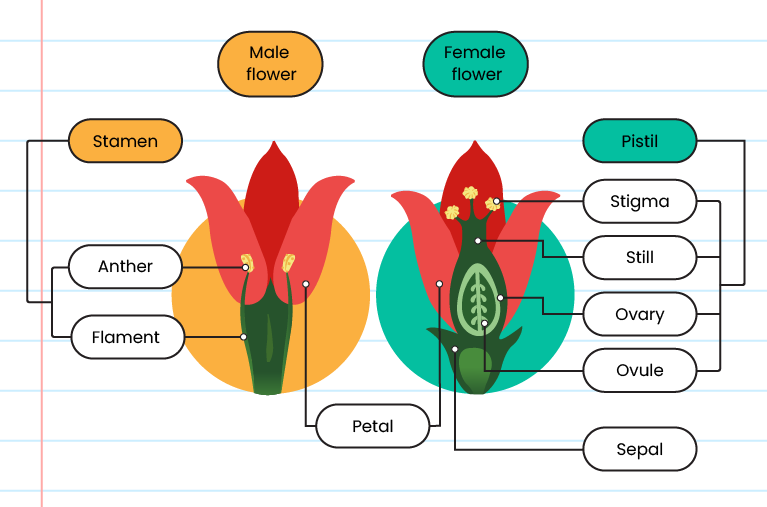 |
|
Example: Corn flower, papaya flower |
| Bisexual |
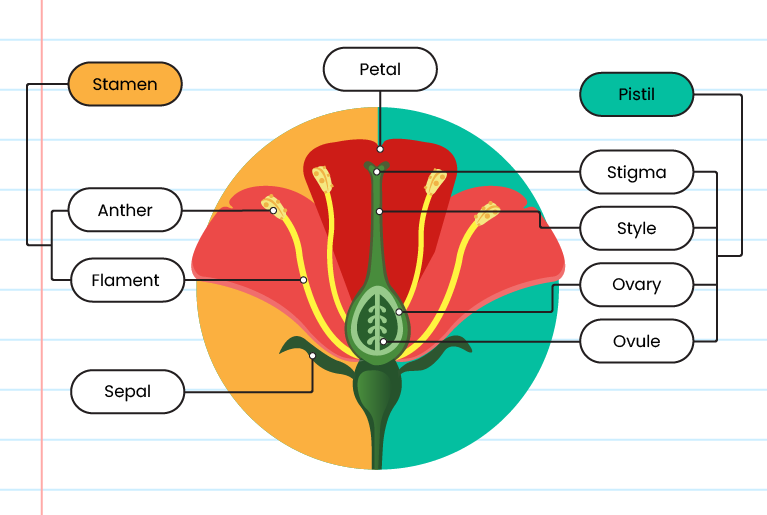 |
|
Example: Rose and Sunflower |
| Types of pollination | |
| Self-pollination | Cross-pollination |
|
|
Pollinating Agents
|
Animals and insects
|
|
Wind
|
The Advantages of Cros-Pollination
- New plants that are more resistant to pests and diseases
- Healthier plants which can adapt better to changes in the environment
- New varieties of plants
- Good quality seeds
The Innovation of Cross-Pollination in Agriculture
| Plant and parent plants | Hybrid plant |
Characteristics of hybrid plant |
|
Palm oil Pisifera and Dura |
Tenera |
More fruits Flesh Thinner shell |
|
Papaya Subang 6 and Sunrise Solo |
Eksotika |
Sweeter Bigger fruits |
Fertilisation Process
 |
Structures of a Seed and Their Functions
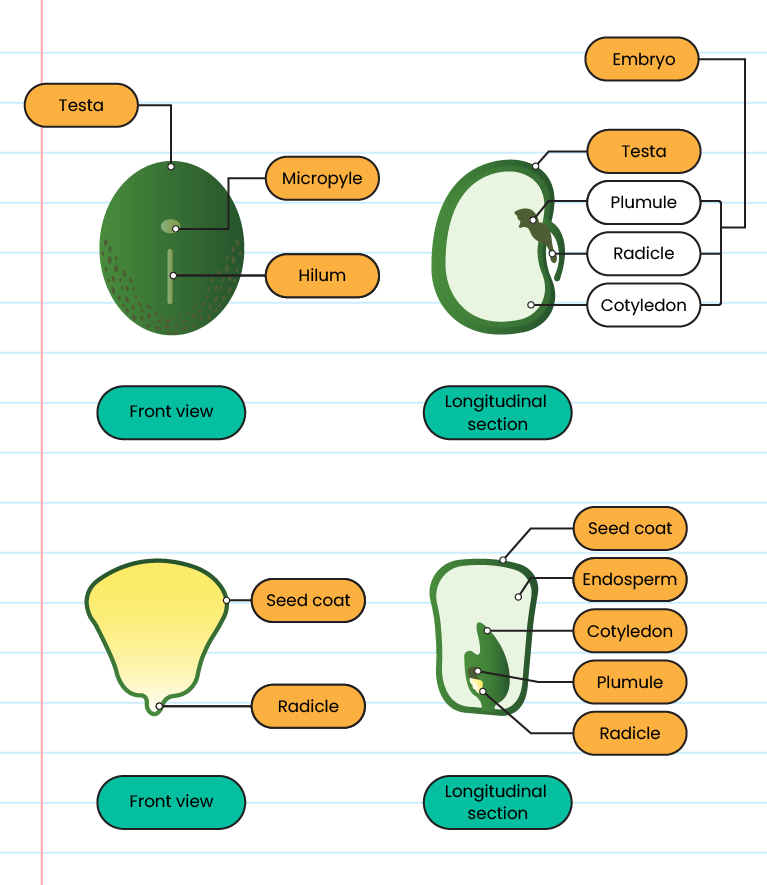
| Structure of dicotyledon | Structure of monocotyledon |
| The structure and functions of a seed | ||
| Part | Structure | Function |
| External | Testa | Protects the seed |
| Hilum | Place where the seed sticks to the frui | |
| Micropyle | Small hole to allow air and water to enter the seed | |
| Embryo | Plumble | Part of the embryo which develops into a new shoot |
| Radicle | Part of the embryo which develops into the root | |
| Cotyledon / Endosperm | Stores and provides food for the seed | |
Germination of Seeds
| Epigeal germination |
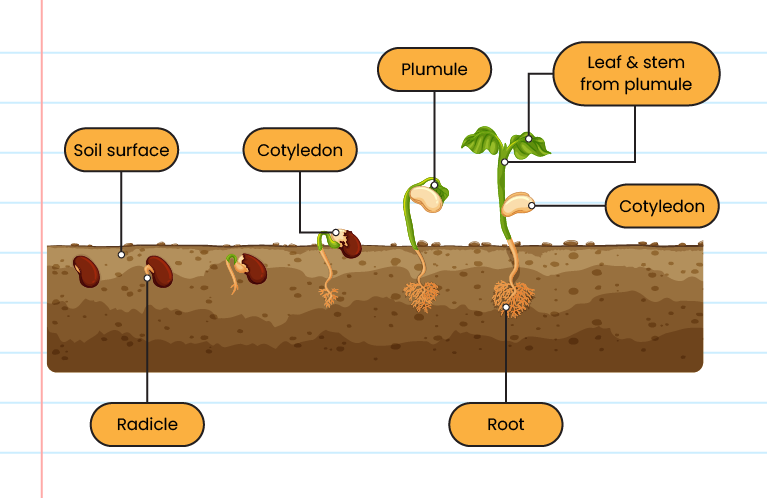 |
| Hypogeal germination |
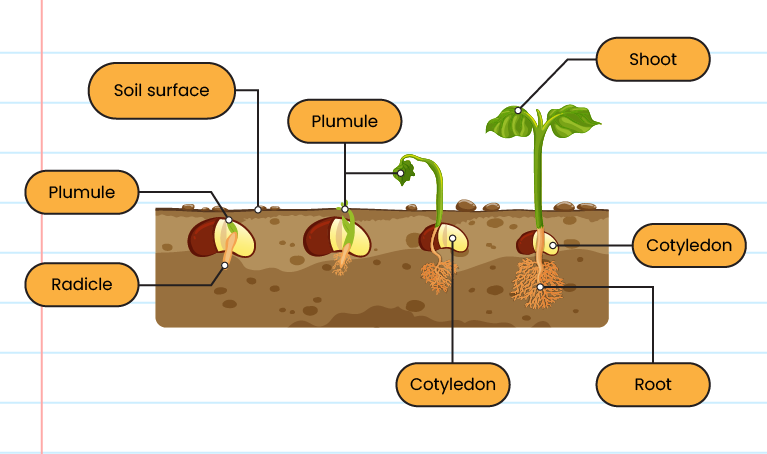 |
The Conditions Required for Germination of Seeds
- Water
- Air
- Suitable temperature

