

4.2
Human Reproductive System
| 4.2 | Human Reproductive System |
| Male Reproductive System |
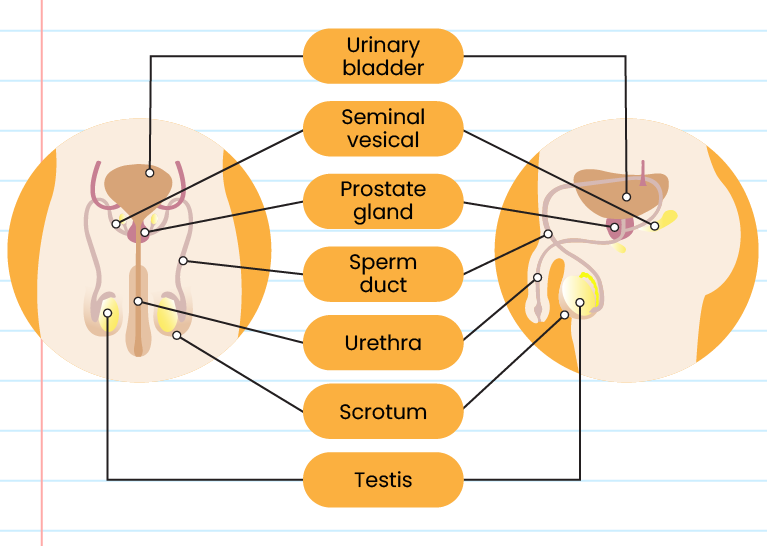 |
| Part | Function |
| Seminal vesicle | Secretes nutritional fluid for the sperms |
| Urethra | A channel to discharge sperms and urine from the body |
| Sperm duct | Transports sperms from the testis to the urethra inside the body |
| Penis | Transfers sperms into the vagina of the female during copulation |
| Scrotum | Holds and protects the testes |
| Testis | Produces male gametes (sperms) and male sex hormones |
| Prostate glands | Secrete fluid which contains nutrients and protects sperm cell |
Female Reproductive System
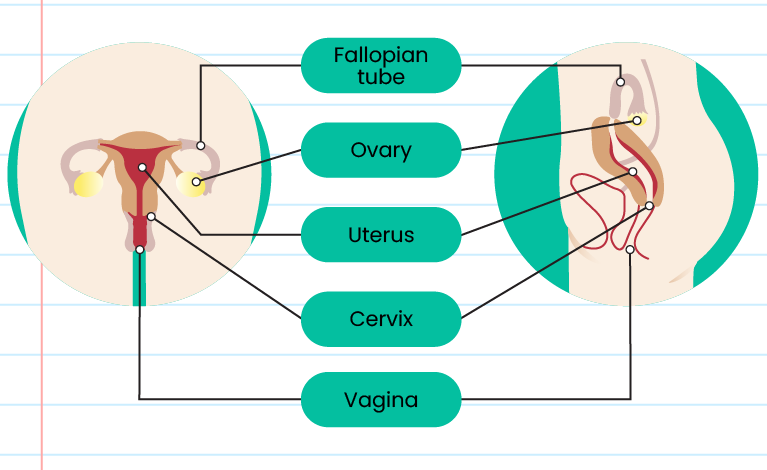
| Part | Function |
| Fallopian tube | Place where fertilisation between sperm and ovum occurs |
| Ovary | Produces female gamete (ovum) and female sex hormones |
| Uterus (womb) | Place where the embryo develops and grows |
| Cervix | Produces mucus to enable sperms to swim into the uterus |
| Vagina | Receives sperms and as a channel through which a baby is born |
Physical Changes that Occur During Puberty
| Male | Female |
|
Voice
|
Body
|
|
Body
|
Reproductive organs
|
|
Reproductive organs
|
Comparison between the Male and Female Gametes
| Sperm | Ovum |
| Able to move | Not able to move |
| Produced by testis | Produced by ovary |
| Male gamete | Female gamete |
| Smallest cell in the male's body | Largest cell in the female's body |
| Carries genetic information | |
| Sexual reproductive cell | |

