
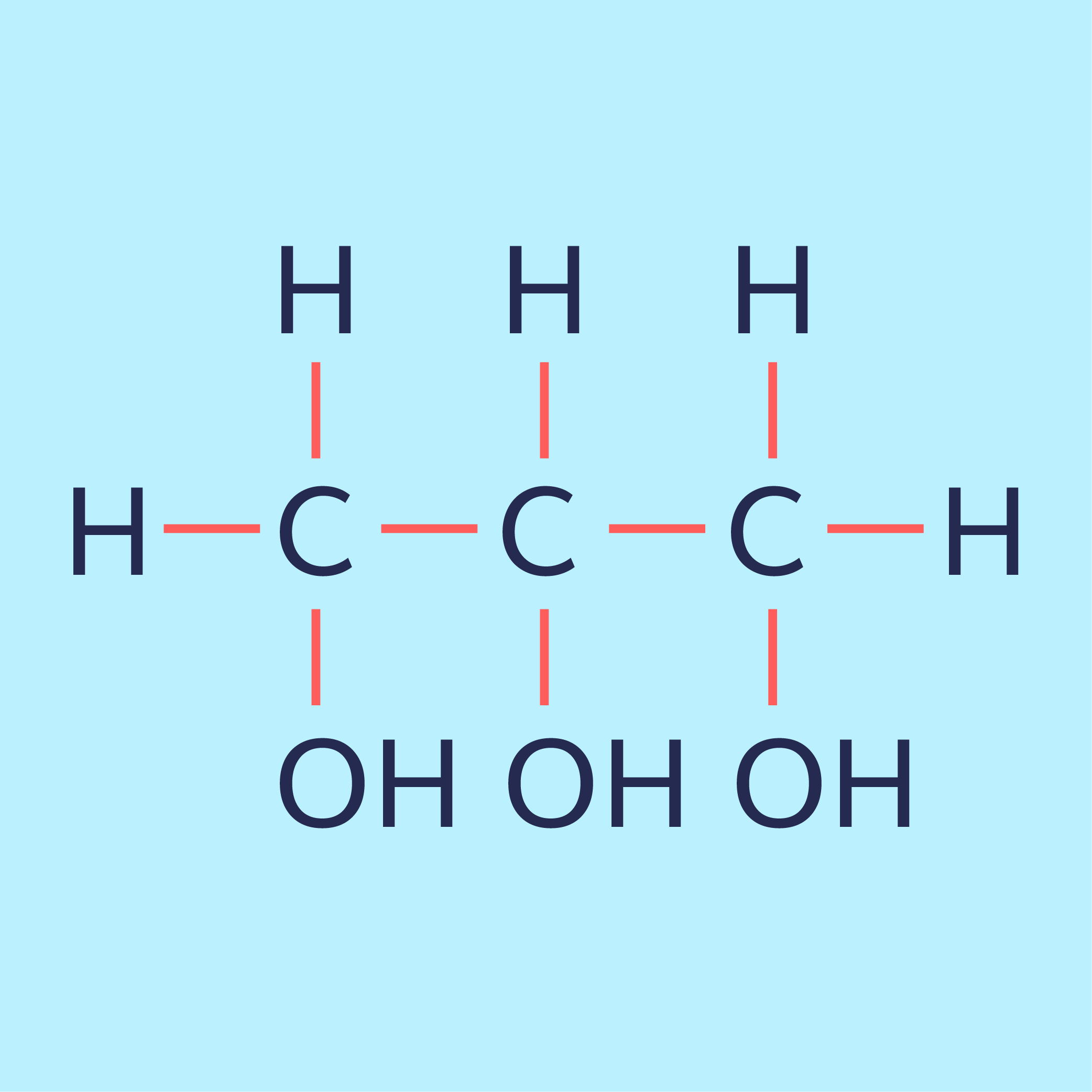
2.2Homologous Series
There are millions of organic compounds known today. To systematically study their physical properties and chemical reactions, organic compounds are classified into specific families known as homologous series. Members of each series share common structural features, a specific functional group, and follow distinct trends in their physical and chemical behaviour.
Learning Objectives
- Explain the meaning and characteristics of a homologous series.
- Construct molecular formulae and structural formulae, and name the members of the homologous series according to IUPAC nomenclature.
- Describe the physical properties of compounds in a homologous series (alkanes, alkenes, alkynes, alcohols, and carboxylic acids).
Summary of Homologous Series Classification and Functional Groups
Compare the general formula, functional group structure, IUPAC suffix, and classification for each homologous series.
| Homologous series | General formula | Functional group | IUPAC suffix | Classification |
|---|---|---|---|---|
| Alkane | \(\text{C}_n\text{H}_{2n+2}\) | \(-\text{C}-\text{C}-\) | -ane | Saturated hydrocarbon |
| Alkene | \(\text{C}_n\text{H}_{2n}\) | \(>\text{C}=\text{C}<\) | -ene | Unsaturated hydrocarbon |
| Alkyne | \(\text{C}_n\text{H}_{2n-2}\) | \(-\text{C}\equiv\text{C}-\) | -yne | Unsaturated hydrocarbon |
| Alcohol | \(\text{C}_n\text{H}_{2n+1}\text{OH}\) | \(-\text{OH}\) | -ol | Non-hydrocarbon |
| Carboxylic acid | \(\text{C}_n\text{H}_{2n+1}\text{COOH}\) | \(-\text{COOH}\) | -oic acid | Non-hydrocarbon |
| Ester | \(\text{C}_m\text{H}_{2m+1}\text{COOC}_n\text{H}_{2n+1}\) | \(-\text{COO}-\) | -oate | Non-hydrocarbon |
Brief Explanation
Understand the key ideas of a homologous series.
1. Characteristics of a Homologous Series
Members of a homologous series:
- are represented by the same general formula.
- have the same functional group.
- show the same chemical properties.
- differ by one carbon atom and two hydrogen atoms (\(-\text{CH}_2-\) group, equivalent to a relative molecular mass difference of 14).
- show a gradual transition in physical properties from one member to the next.
2. Functional Groups and Classification
A functional group is a group of atoms bonded to an organic molecular compound. It determines the chemical properties of the homologous series, and chemical reactions occur at this functional group.
Organic compounds are classified as hydrocarbons (alkanes, alkenes, alkynes) or non-hydrocarbons (alcohols, carboxylic acids, esters).
| Root name | Number of carbon atoms | Root name | Number of carbon atoms |
|---|---|---|---|
| Meth | 1 | Hex | 6 |
| Eth | 2 | Hept | 7 |
| Prop | 3 | Oct | 8 |
| But | 4 | Non | 9 |
| Pent | 5 | Dec | 10 |
3. Molecular and Structural Formulae
A molecular formula shows the type and actual number of atoms of each element in a molecule.
A structural formula shows the type of bond and how the atoms in a molecule are bonded to each other.
4. IUPAC Nomenclature
Naming follows standard IUPAC nomenclature rules by combining a root name (representing the carbon chain length) with a specific suffix characteristic of the family.
Example: propane \(\rightarrow\) propan-1-ol; methane \(\rightarrow\) methanoic acid.
| Series | Example molecular-formula construction | Condensed structural formula | IUPAC naming |
|---|---|---|---|
| Alkane | n = 3: C3H2(3)+2 = C3H8 | CH3–CH2–CH3 | Prop- + -ane = propane |
| Alkene | n = 2: C2H2(2) = C2H4 | CH2=CH2 | Eth- + -ene = ethene |
| Alkyne | n = 2: C2H2(2)−2 = C2H2 | CH≡CH | Eth- + -yne = ethyne |
| Alcohol | n = 3: C3H2(3)+1OH = C3H7OH | CH3–CH2–CH2–O–H | Propane → propan-1-ol (–OH on carbon 1) |
| Carboxylic acid | n = 0: HCOOH; n = 1: CH3COOH | H–C(=O)–O–H | Methane → methanoic acid |
5. Physical Properties of Hydrocarbons
Alkanes, alkenes and alkynes consist of neutral covalent molecules.
- Solubility: Insoluble in water, but soluble in organic solvents.
- Electrical conductivity: Cannot conduct electricity in all states.
- Melting and boiling points: Relatively low; increase as the number of carbon atoms per molecule increases.
- Density: Less dense than water.
6. Physical Properties of Alcohols and Carboxylic Acids
Alcohols and carboxylic acids contain carbon, hydrogen, and oxygen atoms.
- Boiling points: Low, but relatively higher than their corresponding alkenes; increase with the increasing number of carbon atoms per molecule.
- Solubility in water: Methanol, ethanol and propanol are miscible in water in all proportions. Methanoic acid, ethanoic acid and propanoic acid are very soluble in water. Solubility decreases as molecular size increases.
Try These Questions First
Answer mentally, then check the explanation.
What is the structural difference between two consecutive members in any homologous series?
Why does the value of \(n\) start from 0 (\(n = 0, 1, 2, \dots\)) in the general formula of carboxylic acids (\(\text{C}_n\text{H}_{2n+1}\text{COOH}\))?
Why do the melting and boiling points of alkanes increase as the number of carbon atoms increases?
Common Mistakes
Avoid these errors when working with homologous series.
Common Misconceptions
Compare each misconception with the correct fact.
Hydrocarbons can conduct electricity when melted or dissolved.
Hydrocarbons (alkanes, alkenes, alkynes) consist of neutral covalent molecules and do not conduct electricity in any state due to the absence of free-moving ions or delocalised electrons.
All members of alcohols and carboxylic acids dissolve completely in water because they have \(-\text{OH}\) or \(-\text{COOH}\) groups.
Only the small members (first three members) are completely miscible or very soluble. As the hydrophobic hydrocarbon chain increases in length (molecular size increases), their solubility in water decreases significantly.
Summary
Key facts to remember.
- A homologous series is defined by a common general formula, same functional group, identical chemical properties, a constant incremental difference of \(-\text{CH}_2-\), and gradual variation in physical properties.
- Hydrocarbons are divided into saturated (alkanes, containing only \(\text{C}-\text{C}\) single bonds) and unsaturated (alkenes with \(\text{C}=\text{C}\) double bonds, alkynes with \(\text{C}\equiv\text{C}\) triple bonds).
- Non-hydrocarbons contain heteroatoms such as oxygen (alcohols with \(-\text{OH}\), carboxylic acids with \(-\text{COOH}\), and esters with \(-\text{COO}-\)).
- Nomenclature combines the chain length root name (Meth- to Dec-) with the homologous suffix (-ane, -ene, -yne, -ol, -oic acid, -oate).
- Intermolecular van der Waals forces strengthen as molecular size increases, causing melting and boiling points to rise across all series.
Quick Activity
Complete all parts before checking your score.
A. Objective Quiz
Which of the following represents the functional group of an alkene?
What is the IUPAC name for an alcohol with the molecular formula \(\text{C}_3\text{H}_7\text{OH}\) where the hydroxyl group is bonded to the terminal carbon atom?
B. Fill in the Blanks
Consecutive members in a homologous series differ from each other by a single carbon atom and two hydrogen atoms, represented by the formula ______.
In the general formula of carboxylic acids, \(\text{C}_n\text{H}_{2n+1}\text{COOH}\), the value of \(n\) for the first member is ______.
C. Match the Homologous Series with the Functional Group
Drag each series on desktop. On mobile, tap a series and then tap the matching box.
Answer Choices
Alkane Alkyne Alcohol Carboxylic acidFunctional Group Matching
Keywords
Tap or hover over a term to read its meaning.


