
10.1 Types of Circulatory System
Every living cell requires essential substances such as oxygen and nutrients, while expelling cellular wastes such as carbon dioxide and nitrogenous wastes. Learn how organisms overcome the limits of diffusion through open and closed circulatory systems.
Learning Objectives
- State the necessity of transport systems in complex multicellular organisms based on \(\text{TSA/V}\).
- Identify and describe the characteristics of open circulatory systems and closed circulatory systems.
- Describe the structure and blood flow of the circulatory systems in insects, fish, amphibians, and humans.
- Compare and contrast the circulatory systems of insects, fish, amphibians, and humans.
Comparative Architecture of Circulatory Systems in Animals
Visually distinguish between single, incomplete double, and complete double circulation, as well as open versus closed pathways.
Insect
Open circulatory system with haemolymph bathing cells directly in the haemocoel.
Fish
Closed single circulatory system with a two-chambered heart.
Amphibian
Closed incomplete double circulatory system with a three-chambered heart.
Human
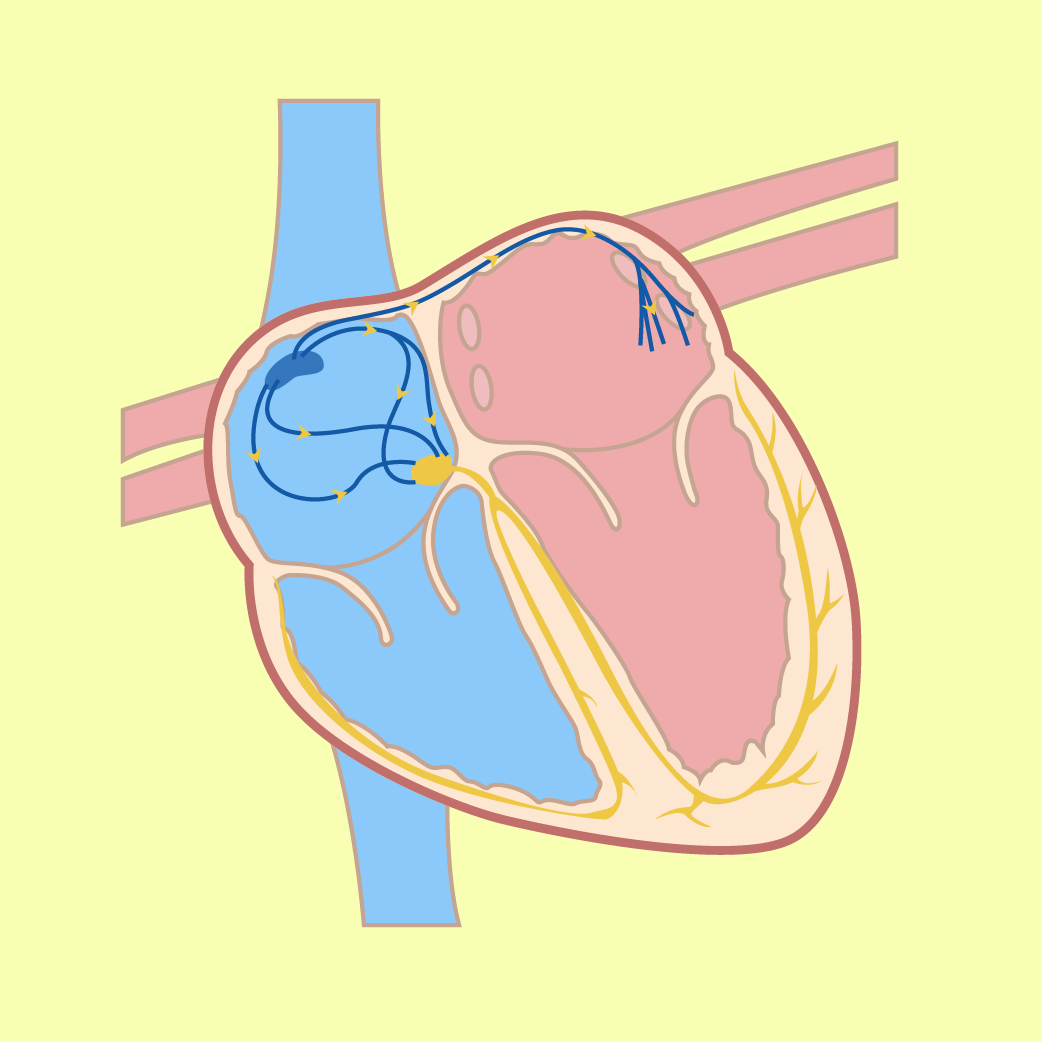
Closed complete double circulatory system with a four-chambered heart.
Short Explanation
The Necessity for Transport Systems
Unicellular organisms like Amoeba sp. have a small body mass and a large \(\text{TSA/V}\), allowing direct exchange of substances by simple diffusion. Large complex multicellular organisms have a small \(\text{TSA/V}\) and deep-lying cells, so simple diffusion is too slow. They require a specialised internal transport system.
Open Circulatory System
Haemolymph flows directly into the body cavity called the haemocoel and bathes the cells directly. Exchange of substances occurs through diffusion across cell surfaces.
Closed Circulatory System
Blood is always retained and confined inside a continuous network of closed blood vessels. Exchange of essential substances and wastes occurs across the thin walls of microscopic blood capillaries.
Circulatory System of Insects
Insects have an open circulatory system. The heart consists of many segmented cavities located dorsally. When the heart contracts, haemolymph is pumped through the aorta into the haemocoel. When the heart relaxes, haemolymph flows back through tiny openings called ostia.
Circulatory System of Fish
Fish have a closed, single circulatory system. The two-chambered heart has one atrium and one ventricle. Blood flows from the ventricle to the gill capillaries, then to the systemic capillaries, and returns to the atrium.
Circulatory System of Amphibians
Amphibians have a closed, incomplete double circulatory system. The three-chambered heart has two atria and one ventricle. Pulmocutaneous circulation and systemic circulation both pass through the single ventricle, where some mixing of blood occurs.
Circulatory System of Humans
Humans have a closed, complete double circulatory system. The four-chambered heart has two atria and two ventricles, completely separated by a septum. Pulmonary circulation and systemic circulation are fully separate, so oxygenated and deoxygenated blood do not mix.
Try to Answer First
Answer in your mind, then press “Check Answer”.
Why does a unicellular organism like Amoeba sp. not require a specialised circulatory system?
Why is the circulatory system of a fish described as a single circulatory system?
Why is the circulatory system of an amphibian described as an incomplete double circulatory system?
Common Mistakes
- Confusing the terms haemolymph and haemocoel: Haemolymph is the fluid, while haemocoel is the body cavity that contains it.
- Assuming insects use haemolymph to transport oxygen: Haemolymph in insects transports nutrients and wastes; respiratory gases are transported separately via the tracheal system.
- Stating that fish have double circulation because blood passes through two capillary beds (gill and systemic): It is a single circulation because blood flows through the heart only once during a complete cycle.
- Forgetting that the amphibian heart has three chambers (two atria and one ventricle), not two or four.
Concept Misunderstandings
All multicellular organisms have blood vessels that form a continuous closed circuit.
Invertebrates like insects have an open circulatory system lacking capillaries; fluid empties directly into the haemocoel.
In amphibians, oxygenated and deoxygenated blood mix completely and homogeneously in the ventricle.
Although some mixing occurs, most oxygenated blood stays on the left side of the ventricle while most deoxygenated blood remains on the right side.
“Incomplete double circulation” means the blood vessels do not form a complete loop.
The loop is closed and complete, but it is called “incomplete” double circulation because there is no complete separation between oxygenated and deoxygenated blood in the single ventricle.
Summary
- Need for Transport: Large organisms have a small \(\text{TSA/V}\) and large diffusion distance, requiring specialized internal transport.
- Open System (Insects): Haemolymph is pumped into the haemocoel; re-enters heart via ostia upon relaxation.
- Closed System (Vertebrates): Blood is confined within continuous vessels; exchange occurs at capillaries.
- Fish: 2 chambers (1 atrium, 1 ventricle); single circulation.
- Amphibians: 3 chambers (2 atria, 1 ventricle); incomplete double circulation (pulmocutaneous and systemic circuits; mixed blood in ventricle).
- Humans: 4 chambers (2 atria, 2 ventricles); complete double circulation (pulmonary and systemic circuits; no mixing of blood).
Short Activity
Objective: identify the types of circulatory systems and their characteristics.
A. Objective Quiz
Which of the following organisms has a closed circulatory system with a three-chambered heart consisting of two atria and one ventricle?
What is the name of the tiny opening through which haemolymph flows back into an insect’s heart when the heart relaxes?
B. Fill in the Blanks
In an open circulatory system, haemolymph flows directly into the body cavity called the to bathe the cells.
The circulatory system of a fish is classified as a circulatory system because blood flows through the heart only once in one complete cycle.
C. Matching / Drag and Drop
Match each organism to the correct characteristic of its circulatory system. On a phone, tap a choice first, then tap the matching box. Tap the Answer Choices area to return a selected item.
C. Match the Organism to Its Circulatory System Characteristic
Write the correct organism next to each characteristic.
| Circulatory System Characteristic | Organism |
|---|---|
| 1. Open circulatory system where haemolymph bathes cells directly in the haemocoel | |
| 2. Closed single circulatory system with a two-chambered heart | |
| 3. Closed incomplete double circulatory system with a three-chambered heart | |
| 4. Closed complete double circulatory system with a four-chambered heart |
Answer choices: Insect • Fish • Amphibian • Human

