
9.5 Defaecation
After the absorption of nutrients is completed in the ileum, the remaining undigested matter passes into the large intestine. The large intestine plays an essential role in recovering water and vital bacterial metabolites, shaping undigested residue into faeces, and facilitating defaecation.
Learning Objectives
- State the two main functions of the large intestine.
- Identify the substances absorbed in the large intestine.
- Describe the components and formation process of faeces.
- Explain the mechanism of defaecation.
- Recognise the role and importance of the bacterial population in the large intestine.
Structure of the Large Intestine and Stages of Faeces Formation
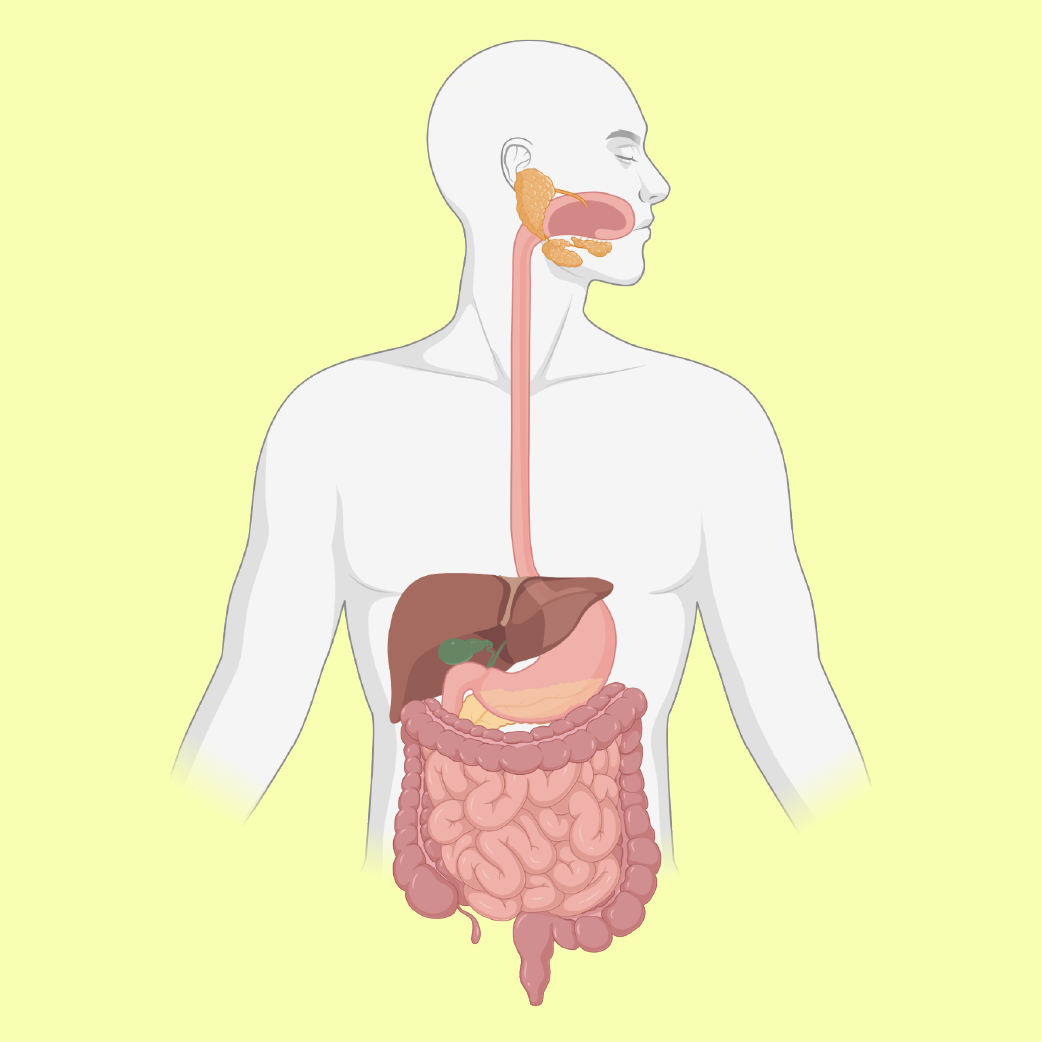
The large intestine consists of the caecum, appendix, colon, rectum and anus. It reabsorbs water and vitamins, then forms and expels faeces.
Caecum
Receives undigested matter from the ileum.
Colon
Reabsorbs water, mineral salts and bacterial vitamins.
Rectum & Anus
Stores faeces and expels it during defaecation.
Short Explanation
What happens after the ileum?
Once the ileum completes nutrient absorption, undigested residue — notably plant cellulose fibre, dead cells and water — passes into the large intestine via peristalsis. The colon reabsorbs water, mineral salts and bacterial byproducts such as vitamin B, vitamin K and folic acid. As water is removed, the remaining matter turns into semisolid faeces. Intestinal mucus lubricates its 12 to 24-hour journey. When faeces collects in the rectum, rising pressure stimulates rectal contractions, expelling the waste through the anus during defaecation.
Two main functions of the large intestine
The large intestine performs two main functions: absorption of water and vitamins, and formation of faeces.
Substances absorbed
Water, mineral salts, and metabolic byproducts of bacterial activity — specifically vitamin B, vitamin K and folic acid.
Components of faeces
Faeces consists of dead cells from the inner layer of the intestine, waste products such as bile pigments, bacteria, and toxic substances.
Transit time
Movement of faeces through the large intestine takes approximately 12 to 24 hours before entering the rectum.
Try to Answer First
Answer in your mind, then press “Check Answer”.
What are the two primary functions of the large intestine?
Name three bacterial metabolic byproducts that are absorbed in the large intestine.
What triggers the reflex to expel faeces from the rectum?
Common Mistakes
- Assuming that digestion of food macromolecules still occurs in the large intestine; digestion is already completed before entering the caecum.
- Believing faeces is purely undigested food, ignoring other major constituents like dead intestinal cells, bile pigments, bacteria, and toxic substances.
- Confusing defaecation with excretion; defaecation is the removal of unabsorbed, undigested matter via the anus, not metabolic waste produced by cellular respiration.
Concept Misunderstandings
All bacteria living in the large intestine are infectious pathogens.
The large intestine hosts over 1000 species of bacteria, many of which are beneficial and produce vital substances like vitamin B, vitamin K, and folic acid.
Faeces moves through the large intestine very rapidly.
The movement is slow, taking roughly 12 to 24 hours before entering the rectum, allowing sufficient time for water and mineral reabsorption.
Summary
- The large intestine receives undigested food, cellulose fibre, dead cells, and water from the ileum.
- Its two main jobs are absorbing water/vitamins and forming faeces.
- Absorbed items include water, mineral salts, vitamin B, vitamin K, and folic acid.
- Faeces comprises dead intestinal cells, bile pigments, bacteria, and toxins.
- Mucus facilitates the 12–24 hour transit through the colon.
- Faecal build-up raises pressure in the rectum, initiating muscular contractions that expel faeces through the anus (defaecation).
Short Activity
Objective: test your understanding of the large intestine, faeces formation and defaecation.
A. Objective Quiz
Which of the following substances is absorbed in the large intestine as a metabolic byproduct of bacteria?
Approximately how long does it take for faeces to move through the large intestine before entering the rectum?
B. Fill in the Blanks
The walls of the large intestine secrete to smoothen the movement of faeces towards the anus.
The process of expelling faeces from the anus through the contraction of rectum muscles is called .
C. Matching / Drag and Drop
Drag each structure or component to its correct description. On a phone, tap a choice first, then tap the matching box. Tap the Answer Choices area to return a selected item.
C. Match the Structure or Component to Its Description
Write the correct structure or component next to each description.
| Description | Structure / Component |
|---|---|
| 1. Cellulose walls of plant cells that move undigested into the large intestine | |
| 2. Waste products found inside faeces alongside dead cells and toxic substances | |
| 3. Chamber where faeces accumulates until increased pressure triggers expulsion | |
| 4. Secretion from the large intestine walls that smoothens faecal movement |
Answer choices: Fibre • Bile pigments • Rectum • Mucus

