
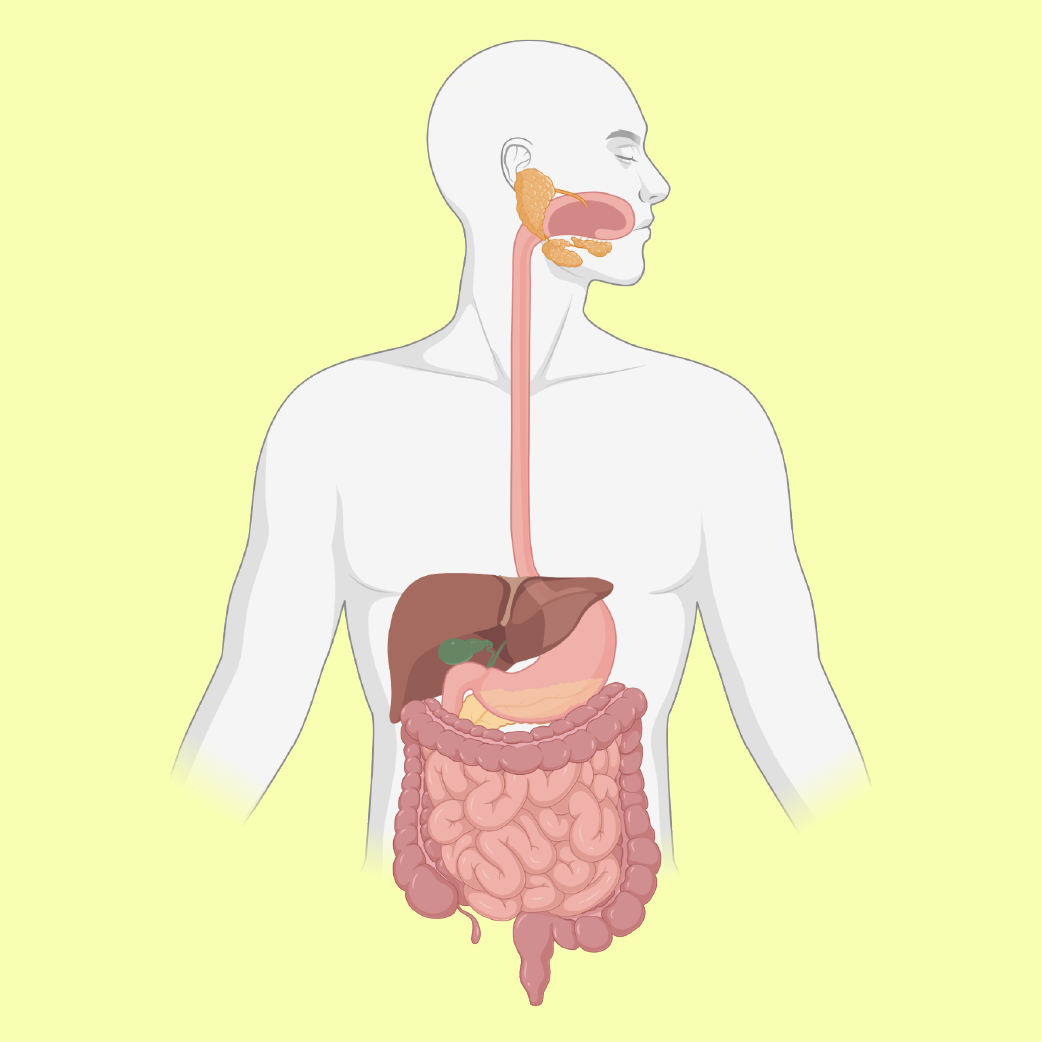
9.2 Digestion
Digestion is the essential process that breaks down large and complex food substances into smaller, soluble molecules that can be readily absorbed by the body cells. Digestion involves both physical breakdown, such as chewing and peristalsis, and chemical digestion catalysed by specific digestive enzymes along the human alimentary canal—from the mouth to the stomach and small intestine.
Learning Objectives
- Define digestion and distinguish between physical digestion and chemical digestion.
- Describe the digestion of carbohydrates in the mouth, including the action of salivary amylase.
- Explain the process of peristalsis and swallowing.
- Detail the digestion of proteins in the stomach, including the functions of gastric juice components.
- Explain the digestion of carbohydrates, proteins, and lipids in the small intestine.
- Describe laboratory experiments demonstrating the digestion of starch, proteins, and lipids.
Summary of Chemical Digestion Along the Human Alimentary Canal
The progression of carbohydrate, protein, and lipid digestion through the mouth, stomach, duodenum, and ileum, including the enzymes, substrates, and end products at each stage.
Carbohydrates
Starch → Maltose → Glucose. Sucrose → Glucose + Fructose. Lactose → Glucose + Galactose.
Proteins
Proteins → Polypeptides → Peptides → Amino acids.
Lipids
Lipid droplets (emulsified by bile) → Fatty acids + Glycerol.
Short Explanation
Definition of Digestion
Digestion is the process that breaks down large and complex pieces of food into smaller and simple pieces that can be dissolved for easy absorption.
Physical Digestion
The mechanical breakdown of food to form small particles. It involves chewing and peristalsis, and does not involve chemical alterations of molecular bonds.
Chemical Digestion
The decomposition process of complex molecules into simple molecules. It involves enzyme-catalysed hydrolysis reactions.
Digestion in the Mouth
Saliva contains salivary amylase, which operates at an optimum pH range of 6.5–7.5. Starch + water → maltose. Saliva lubricates food to form a bolus, making it easier to swallow. The epiglottis closes the trachea opening to prevent food from entering the trachea.
Digestion of Protein in the Stomach
Gastric glands contain chief cells (secrete pepsinogen), parietal cells (secrete hydrochloric acid), and mucous cells (secrete mucus). HCl activates pepsinogen into pepsin, provides an acidic medium of pH 1.5–2.0, stops salivary amylase action, and kills bacteria. Pepsin hydrolyses proteins into polypeptides. Mucus protects the stomach wall.
Digestion in the Duodenum
Bile from the liver neutralises acidic chyme, provides an alkaline condition of pH 7.6–8.6, and emulsifies lipids. Pancreatic juice contains pancreatic amylase, trypsin, and pancreatic lipase.
Digestion in the Ileum
Intestinal juice contains maltase, sucrase, lactase, erepsin, and lipase. These enzymes complete the breakdown into glucose, fructose, galactose, amino acids, fatty acids, and glycerol.
Try to Answer First
Answer in your mind, then press “Check Answer”.
What are the three types of epithelial cells found in the gastric glands, and what are their specific secretions?
Why must bile emulsify lipids before pancreatic lipase can act effectively?
What is the end product of protein digestion catalysed by erepsin in the ileum?
Common Mistakes
- Thinking that chemical digestion of carbohydrates continues in the stomach: Hydrochloric acid lowers the pH to 1.5–2.0, which completely denatures and stops the action of salivary amylase.
- Confusing pepsinogen with pepsin: Pepsinogen is the inactive precursor secreted by chief cells; it is only converted into the active enzyme pepsin in the presence of hydrochloric acid.
- Assuming bile contains digestive enzymes: Bile does not contain any digestive enzymes; its role in lipid breakdown is purely physical (emulsification to increase surface area) and chemical neutralisation.
- Confusing the digestive actions of the duodenum and ileum: Polypeptides are hydrolysed to peptides in the duodenum by trypsin, whereas peptides are fully hydrolysed to amino acids in the ileum by erepsin.
Concept Misunderstandings
Bile chemically digests lipids into fatty acids and glycerol.
Bile does not digest lipids chemically because it contains no enzymes; it only emulsifies lipids into tiny droplets (physical breakdown) to increase surface area for lipase.
Salivary amylase breaks starch all the way down into glucose in the mouth.
Salivary amylase only hydrolyses starch into the disaccharide maltose. Glucose is only produced later in the ileum when maltase hydrolyses maltose.
Peristalsis only occurs in the oesophagus.
Peristalsis occurs along the entire muscular alimentary canal, including the oesophagus, stomach, and intestines, to churn and move food contents forward.
Summary
- Digestion is divided into physical digestion (mechanical breakdown via chewing and peristalsis) and chemical digestion (hydrolysis of complex molecules catalysed by enzymes).
- Mouth: Salivary amylase breaks down starch to maltose (pH 6.5–7.5). Epiglottis closes the trachea during swallowing; peristalsis pushes bolus down the oesophagus.
- Stomach: Gastric glands secrete mucus (mucous cells), hydrochloric acid (parietal cells), and pepsinogen (chief cells). Hydrochloric acid provides pH 1.5–2.0, activates pepsinogen into pepsin, and kills bacteria. Pepsin hydrolyses proteins into polypeptides. Chyme is formed.
- Duodenum: Receives bile (emulsifies lipids, provides pH 7.6–8.6) and pancreatic juice containing pancreatic amylase (starch → maltose), trypsin (polypeptides → peptides), and lipase (lipids → fatty acids and glycerol).
- Ileum: Secretes intestinal juice containing maltase (maltose → glucose), sucrase (sucrose → glucose + fructose), lactase (lactose → glucose + galactose), erepsin (peptides → amino acids), and lipase (lipids → fatty acids + glycerol).
Short Activity
Objective: test your understanding of digestive enzymes, gastric cells, and the breakdown of carbohydrates, proteins, and lipids.
A. Objective Quiz
Which cell in the gastric glands is responsible for secreting hydrochloric acid?
What is the specific action of the enzyme erepsin in the ileum?
B. Fill in the Blanks
In the stomach, inactive pepsinogen is activated into pepsin by acid.
Bile produced by the liver breaks down lipids into tiny droplets through the process of .
C. Matching / Drag and Drop
Drag each digestive enzyme to its correct enzymatic reaction or function. On a phone, tap a choice first, then tap the matching box. Tap the Answer Choices area to return a selected item.
C. Match the Enzyme to Its Reaction or Function
Write the correct enzyme next to each reaction or function.
| Reaction / Function | Enzyme |
|---|---|
| 1. Hydrolyses starch into maltose in the mouth | |
| 2. Hydrolyses proteins into polypeptides in the stomach | |
| 3. Hydrolyses polypeptides into shorter peptides in the duodenum | |
| 4. Hydrolyses lactose into glucose and galactose in the ileum |
Answer choices: Salivary amylase • Pepsin • Trypsin • Lactase

