
9.1 Digestive System
The human digestive system breaks down large and complex food pieces into smaller, soluble particles that can be easily absorbed by the body.
Learning Objectives
- Identify the structure and organs of the human digestive system, including the alimentary canal and accessory organs.
- State the glands that secrete digestive juices into the alimentary canal.
- Define digestion and distinguish between physical digestion and chemical digestion.
- Describe the beginning of the digestive process and carbohydrate digestion in the mouth.
The Human Digestive System and Types of Digestion
Locate the main organs of the alimentary canal and compare physical digestion with chemical digestion.
Alimentary canal
Long and muscular tube from the mouth to the anus.
Accessory organs
Liver, gallbladder and pancreas assist digestion.
Digestive glands
Salivary, gastric and intestinal glands secrete digestive juices.
Short Explanation
Definition of digestion
Digestion is the process that breaks down large and complex pieces of food into smaller and simple pieces that can be dissolved for easy absorption.
Structure of the digestive system
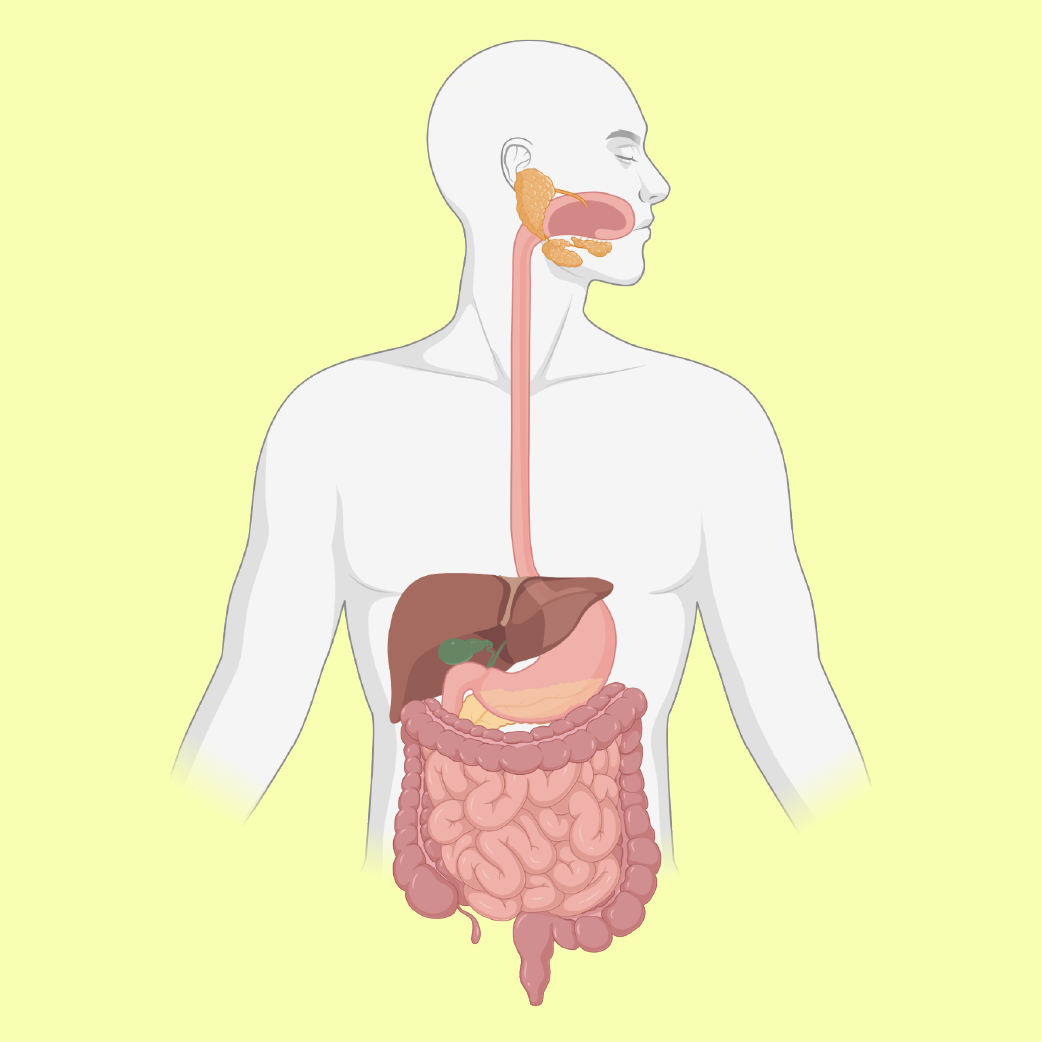
The human digestive system consists of a long and muscular alimentary canal extending from the mouth to the anus. The parts of the alimentary canal are the mouth, oesophagus, stomach, small intestine, large intestine and anus. The pharynx, tongue, rectum and appendix are additional structures shown in Figure 9.1.
Accessory organs and glands
Other digestive organs include the liver, gallbladder and bile duct, and pancreas. The salivary glands, gastric glands and intestinal glands secrete digestive juices into the alimentary canal.
Physical digestion
Physical digestion is the mechanical breakdown of food to form small particles. It involves chewing and peristalsis.
Chemical digestion
Chemical digestion is the decomposition process of complex molecules into simple molecules. It involves enzyme reactions.
Digestion begins in the mouth
The digestive process begins in the mouth. The presence of food in the mouth stimulates the secretion of saliva from the salivary glands.
Try to Answer First
Answer in your mind, then press “Check Answer”.
What are the three organs in the digestive system that are not part of the alimentary canal tube itself?
What is the difference between physical digestion and chemical digestion in terms of the processes involved?
Where does the digestive process begin, and what stimulates the secretion of saliva?
Common Mistakes
- Confusing accessory organs (liver, gallbladder, pancreas) with organs that form the direct path of the alimentary canal.
- Describing physical digestion as involving chemical substances or enzymes, rather than purely mechanical breakdown (chewing and peristalsis).
- Stating that chemical digestion merely makes food particles smaller in size, without specifying that it decomposes complex molecules into simple molecules via enzyme reactions.
Concept Misunderstandings
Digestion only occurs in the stomach.
Digestion begins in the mouth as soon as food is chewed and mixed with saliva.
Peristalsis is a form of chemical digestion.
Peristalsis is part of physical digestion because it is a mechanical process that moves and breaks down food particles without enzyme-catalysed molecular change.
Summary
- The human digestive system consists of a muscular alimentary canal (mouth, oesophagus, stomach, small intestine, large intestine, anus) and accessory organs (liver, gallbladder, pancreas).
- Glands such as salivary, gastric, and intestinal glands secrete digestive juices.
- Digestion involves physical digestion (mechanical breakdown via chewing and peristalsis) and chemical digestion (decomposition of complex molecules into simple molecules using enzymes).
- Digestion starts right in the mouth upon saliva secretion.
Short Activity
Objective: identify the organs of the digestive system and compare physical and chemical digestion.
A. Objective Quiz
Which of the following is an organ of the digestive system that is not part of the alimentary canal?
Which statement correctly describes physical digestion?
B. Fill in the Blanks
Digestion is the process that breaks down large and complex pieces of food into smaller and simple pieces that can be dissolved for easy .
The secretion of saliva from the salivary glands is stimulated by the presence of in the mouth.
C. Matching / Drag and Drop
Drag each term to its correct textbook description. On a phone, tap a choice first, then tap the matching box. Tap the Answer Choices area to return a selected item.
C. Match the Term to Its Description
Write the correct term next to each description.
| Description | Term |
|---|---|
| 1. Mechanical breakdown of food involving chewing and peristalsis | |
| 2. Decomposition of complex molecules into simple molecules involving enzymes | |
| 3. Long and muscular tube that starts from the mouth to the anus | |
| 4. Glands that secrete saliva into the mouth when food is present |
Answer choices: Physical digestion • Chemical digestion • Alimentary canal • Salivary glands

