
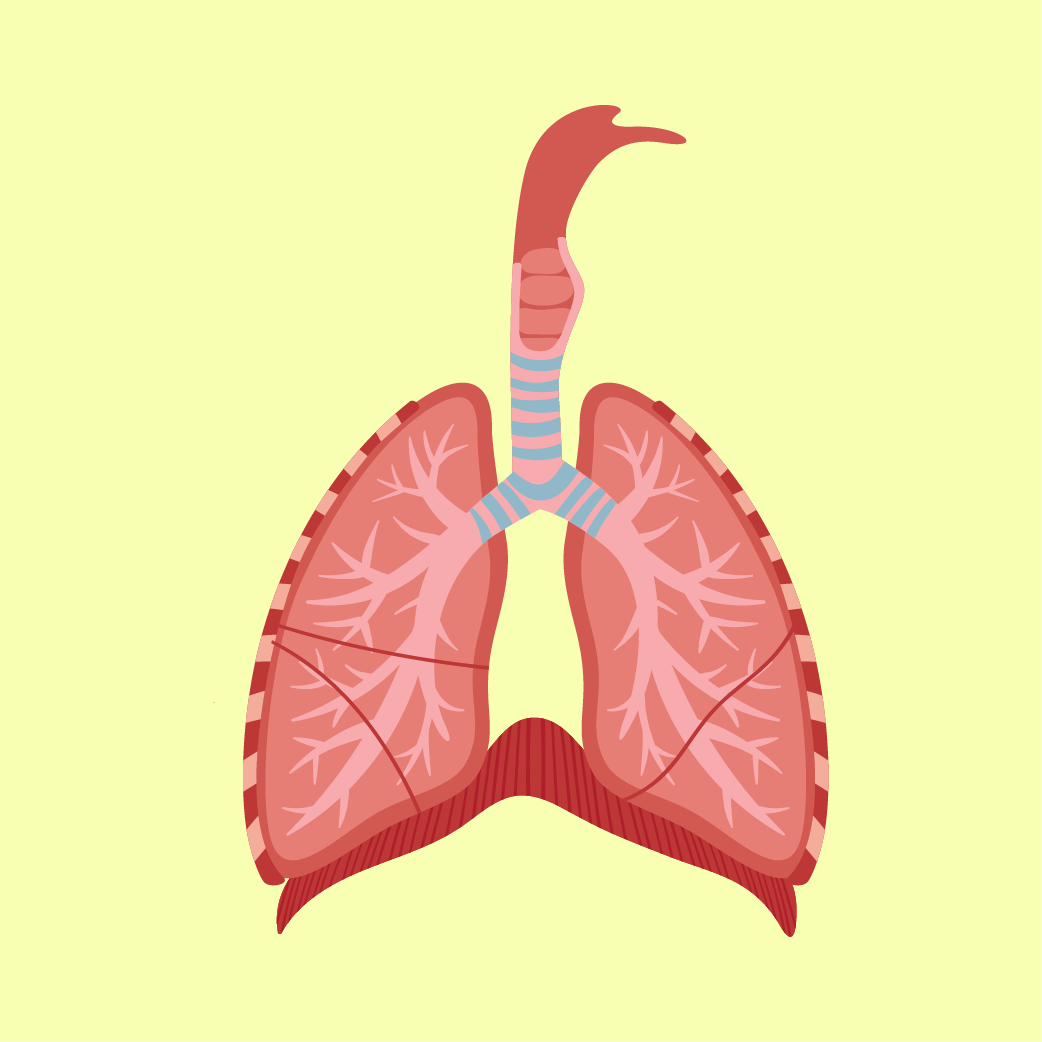
8.4 Health Issues Related to the Human Respiratory System
The human respiratory system can be affected by various health issues that disrupt normal breathing and gaseous exchange. Chronic Obstructive Pulmonary Disease (COPD) refers to a group of lung conditions that cause respiratory difficulties, namely asthma, chronic bronchitis, and emphysema. Each condition affects specific parts of the respiratory tract—such as the bronchioles or alveoli—causing structural damage and impairing respiratory function.
Learning Objectives
- State that Chronic Obstructive Pulmonary Disease (COPD) comprises asthma, chronic bronchitis, and emphysema.
- Explain the causes, structural changes, and effects on the alveoli in emphysema.
- Describe the symptoms, structural changes in the bronchioles, and effects of chronic bronchitis.
- Describe the condition of the bronchiole walls and breathing difficulties experienced by an asthma patient.
Comparison of Respiratory Structures in Normal vs COPD Conditions
Illustrate and contrast the structural changes in the bronchioles and alveoli caused by asthma, chronic bronchitis, and emphysema compared to healthy structures.
Asthma
The bronchiole walls become swollen and thick. The opening of the bronchiole tube becomes smaller and the air passage narrows, causing breathlessness.
Chronic Bronchitis
The bronchiole becomes inflamed, swollen, and blocked. Excessive mucus is generated, causing continuous coughing, while damaged cilia fail to expel the mucus.
Emphysema
The alveolus loses its elasticity and increases in size. The alveolus wall is damaged, so the total surface area decreases and gaseous exchange becomes less efficient.
Short Explanation
What is COPD?
Chronic Obstructive Pulmonary Disease (COPD) is a progressive lung disorder encompassing three related conditions: asthma, chronic bronchitis, and emphysema.
Emphysema
Emphysema targets the alveoli. Due to damage to the alveolar walls, the alveoli lose elasticity, enlarge, and break down, which drastically lowers the total surface area available for gaseous exchange between air and blood capillaries.
Chronic Bronchitis
Chronic bronchitis targets the bronchioles. The airways become inflamed, swollen, and obstructed. Excessive mucus is secreted, prompting persistent coughing. Furthermore, damaged cilia are unable to effectively sweep away this thick mucus.
Asthma
Asthma involves swelling and thickening of the bronchiole walls. This constricts the lumen (opening) of the bronchiole tube, restricting airflow and causing severe breathlessness and breathing difficulties.
Why does gaseous exchange become less efficient in emphysema?
Although the alveolus increases in size, its internal walls are damaged and broken down. This significantly decreases the overall total surface area available for gaseous exchange, making it less efficient.
Try to Answer First
Answer in your mind, then press “Check Answer”.
What are three diseases that make up Chronic Obstructive Pulmonary Disease (COPD)?
Why does gaseous exchange become less efficient in a patient suffering from emphysema?
What causes difficulty in expelling mucus in a patient with chronic bronchitis?
Common Mistakes
- Confusing the structural site affected by emphysema versus chronic bronchitis (emphysema affects the alveoli, whereas chronic bronchitis affects the bronchioles).
- Assuming that an enlarged alveolus in emphysema increases the surface area for gas exchange; in reality, the breakdown of internal alveolar walls reduces the total surface area.
- Forgetting that chronic bronchitis involves both excessive mucus secretion and damaged cilia, which together hinder mucus expulsion.
Concept Misunderstandings
In emphysema, because the alveoli become larger in size, they can take in more air and increase gaseous exchange.
Although the alveolus increases in size, its internal walls are damaged and broken down, which significantly decreases the overall total surface area available for gaseous exchange, making it less efficient.
Asthma damages the alveolar walls directly.
Asthma primarily affects the bronchioles, causing the bronchiole walls to swell and thicken, narrowing the air passage.
Summary
- Chronic Obstructive Pulmonary Disease (COPD) comprises asthma, chronic bronchitis, and emphysema.
- In emphysema, the alveoli lose elasticity, increase in size, and their walls become damaged, reducing the total surface area and efficiency of gaseous exchange.
- In chronic bronchitis, bronchioles become inflamed, swollen, and blocked with excessive mucus, while damaged cilia fail to expel the mucus, causing chronic coughing and breathing difficulty.
- In asthma, bronchiole walls swell and thicken, narrowing the air passage and causing breathlessness.
Short Activity
Objective: identify the structural changes and effects of asthma, chronic bronchitis, and emphysema.
A. Objective Quiz
Which of the following structural changes occurs in the alveolus of a patient suffering from emphysema?
What causes continuous coughing in a chronic bronchitis patient?
B. Fill in the Blanks
In asthma, the bronchiole walls become swollen and thick, causing the air passage to become .
In chronic bronchitis, difficulty in expelling mucus is caused by damaged .
C. Matching / Drag and Drop
Match each respiratory condition or feature to its correct description based on the textbook. On a phone, tap a choice first, then tap the matching box. Tap the Answer Choices area to return a selected item.
C. Match the Feature / Condition to Its Description
Write the correct feature or condition next to each description.
| Description | Feature / Condition |
|---|---|
| 1. Alveolus loses elasticity, increases in size, and its total surface area decreases | |
| 2. Bronchioles become inflamed, generate excessive mucus, and cilia are damaged | |
| 3. Bronchiole walls become swollen and thick, narrowing the opening of the tube | |
| 4. Causes difficulty in expelling mucus from the respiratory tract |
Answer choices: Emphysema • Chronic bronchitis • Asthma • Damaged cilium

