
8.2 Mechanisms of Breathing
Breathing refers to the repetitive process of inhalation and exhalation. Different organisms have adapted unique muscular structures and mechanisms to change the volume and pressure in their respiratory cavities, allowing air or water to move in and out of their respiratory systems.
Learning Objectives
- Describe the breathing mechanisms in insects, fish, frogs, and humans.
- Compare and contrast the breathing mechanisms between humans and animals (insects, fish, and frogs).
Comparison of Inhalation and Exhalation Mechanisms across Organisms
All breathing mechanisms rely on a common physical principle: altering cavity volume to change internal pressure relative to the external environment.
Insect
Abdominal muscles relax during inhalation and contract during exhalation, changing tracheal pressure through the spiracles.
Fish
The mouth, muscular buccal cavity floor and operculum work together to push water across the gill lamellae.
Frog
The buccopharyngeal cavity floor, nostrils and glottis coordinate to draw air in and push it into the elastic lungs.
Human
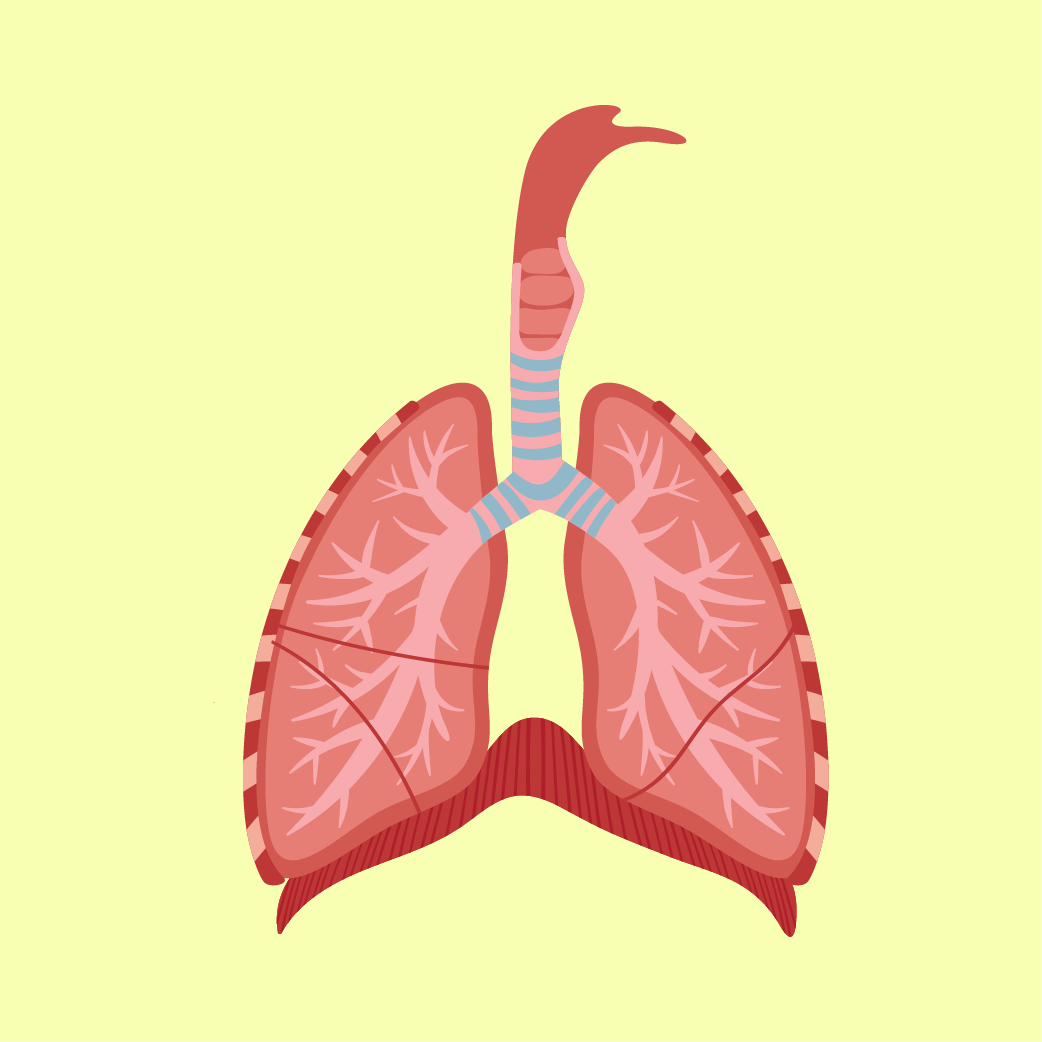
Antagonistic intercostal muscles, the ribcage and the diaphragm adjust thoracic cavity volume to ventilate the lungs.
Short Explanation
Definition of Breathing
Breathing refers to the repetitive inhalation and exhalation process. Humans and animals have different breathing mechanisms.
Breathing Mechanism of Insects
Enabled by the relaxation and contraction of abdominal muscles. During inhalation, abdominal muscles relax, air pressure in the trachea decreases, and air enters through the spiracles. During exhalation, abdominal muscles contract, air pressure increases, and air is forced out of the spiracles.
Breathing Mechanism of Frogs
Active frogs breathe through their mouth and lungs. Inhalation first fills the buccopharyngeal cavity through the nostrils, then the glottis opens and the raised buccopharyngeal floor pushes air into the lungs. Exhalation occurs when the lungs contract and air is expelled through the nostrils.
Breathing Mechanism of Fish
Aided by mouth movement and the operculum. During inhalation, the mouth opens, the buccal floor lowers and the operculum opening closes, reducing pressure so water enters. During exhalation, the mouth closes, the buccal floor rises and water is forced out through the operculum opening.
Breathing Mechanism of Humans
During inhalation, external intercostal muscles contract, the ribcage moves upwards and outwards, and the diaphragm contracts flat. Thorax volume increases and pressure decreases, drawing air in. During exhalation, internal intercostal muscles contract, the ribcage moves downwards and inwards, and the diaphragm relaxes into a dome, pushing air out.
Try to Answer First
Answer in your mind, then press “Check Answer”.
What happens to the abdominal muscles and the internal air pressure in an insect during inhalation?
What is the state of the mouth and the operculum opening when water flows over the gill lamellae in a fish?
During human exhalation, what are the actions of the external and internal intercostal muscles?
Common Mistakes
- Confusing insect abdominal muscle actions: students often think abdominal muscles contract during inhalation; in fact, they relax during inhalation and contract during exhalation.
- Forgetting the status of the glottis and nostrils in frogs: students often mix up when the glottis opens (when air is pushed into lungs) versus when nostrils close.
- Swapping human intercostal muscle actions: forgetting that the external and internal intercostal muscles are antagonistic (external contracts in inhalation; internal contracts in exhalation).
- Misunderstanding fish opercular valves: thinking the operculum opening opens to take water in, whereas it closes during inhalation and opens during exhalation.
Concept Misunderstandings
Breathing directly causes gaseous exchange across all surfaces.
Breathing is the mechanical process of ventilation (inhalation and exhalation) that moves air or water; gaseous exchange occurs subsequently across thin respiratory surfaces via diffusion.
The human diaphragm curves upwards when it contracts.
Contraction pulls the diaphragm downwards into a flat, horizontal sheet; relaxation allows it to curve upward into a dome shape.
Summary
- Breathing mechanisms in insects, fish, frogs, and humans all operate by creating pressure differences via volume changes in respiratory cavities.
- Insects rely on spiracles and abdominal muscles.
- Fish use the mouth, buccal cavity floor, and operculum.
- Frogs utilise nostrils, the buccopharyngeal floor, glottis, and elastic lungs.
- Humans rely on antagonistic intercostal muscles, the ribcage, and the diaphragm to ventilate the lungs.
Short Activity
Objective: identify the breathing mechanisms of insects, fish, frogs, and humans.
A. Objective Quiz
During human inhalation, which of the following events takes place?
What causes water containing dissolved oxygen to enter the mouth of a fish during inhalation?
B. Fill in the Blanks
In insects, the abdominal muscles during exhalation to increase air pressure in the trachea.
In frogs, air is pushed into the lungs when the nostrils close, the glottis opens, and the floor of the buccopharyngeal cavity is .
C. Matching / Drag and Drop
Drag each organism to its correct breathing feature or structure. On a phone, tap a choice first, then tap the matching box. Tap the Answer Choices area to return a selected item.
C. Match the Organism to Its Breathing Feature
Write the correct organism next to each breathing feature.
| Breathing Feature / Structure | Organism |
|---|---|
| 1. Uses spiracles and abdominal muscle contraction/relaxation to alter tracheal pressure. | |
| 2. Coordinated action of mouth, muscular buccal cavity floor, and operculum. | |
| 3. Uses nostrils, a movable buccopharyngeal cavity floor, and lung elasticity. | |
| 4. Intercostal muscles, ribcage, and diaphragm altering thoracic cavity volume. |
Answer choices: Insect • Fish • Frog • Human

