
7.2 Aerobic Respiration
Aerobic respiration is the primary cellular pathway that releases energy from food in the presence of oxygen. It involves breaking down glucose completely into carbon dioxide and water while producing adenosine triphosphate (ATP), the universal energy carrier used by cells for vital biological activities.
Learning Objectives
- Define aerobic respiration and state its word equation.
- Identify the two main stages of aerobic respiration: glycolysis and the oxidation of pyruvate.
- State the cellular locations where glycolysis and the oxidation of pyruvate occur.
- Describe the production and breakdown of adenosine triphosphate (ATP).
- Explain the setup and function of components in a respirometer used to study aerobic respiration.
Summary of Aerobic Respiration and the Respirometer Setup
Trace the two stages of aerobic respiration, the ATP–ADP cycle, and the pressure changes inside a respirometer.
Glycolysis
Occurs in the cytoplasm. One glucose molecule is broken down into two pyruvate molecules without oxygen.
Oxidation of Pyruvate
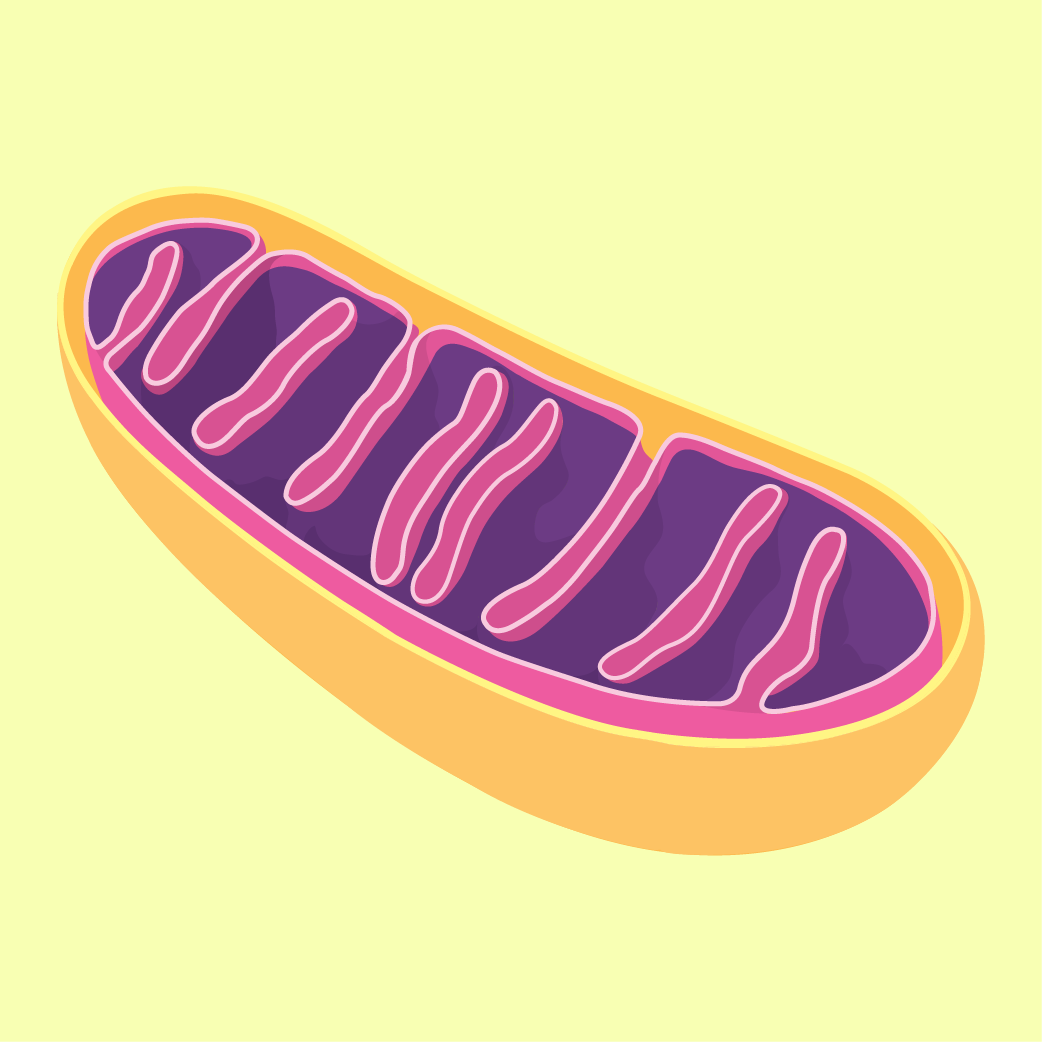
Occurs in the mitochondrion. Pyruvate is oxidised to produce carbon dioxide, water and ATP.
Respirometer
Measures the rate of respiration by estimating the rate of oxygen consumed by a living organism.
Short Explanation
Meaning of Aerobic Respiration
Aerobic respiration is the breakdown of glucose involving oxygen to produce chemical energy. Oxygen oxidises glucose to produce carbon dioxide, water, and energy.
Stage 1: Glycolysis
Glycolysis means the breakdown of glucose by enzymes. It occurs in the cytoplasm. One glucose molecule is broken down into two pyruvate molecules. This stage does not require oxygen.
Stage 2: Oxidation of Pyruvate
This stage occurs in the mitochondrion. Pyruvate produced from glycolysis is oxidised through a series of reactions. It produces carbon dioxide, water, and energy. A large amount of this energy is used to synthesise ATP molecules.
ATP Production
ATP molecules are produced when an inorganic phosphate group is added to adenosine diphosphate (ADP).
\[ \text{ADP} + \text{phosphate} + \text{energy} \rightarrow \text{ATP} \]
Energy Release
ATP contains weak phosphate bonds. When these bonds are broken, energy is released and supplied to cells to carry out cellular activities.
\[ \text{ATP} \rightarrow \text{ADP} + \text{phosphate} + \text{energy} \]
Word Equation
\[ \text{Glucose} + \text{oxygen} \rightarrow \text{Carbon dioxide} + \text{water} + \text{energy } (2898\text{ kJ}) \]
Mitochondria in Muscle Cells
Intensive physical training increases the number of mitochondria in an athlete's muscle cells. A higher number of mitochondria increases the rate of cellular aerobic respiration, producing more ATP to supply energy for vigorous muscle contractions.
Try to Answer First
Answer in your mind, then press “Check Answer”.
Where does glycolysis take place in the cell, and what is its end product?
What is the total energy released from the complete oxidation of one mole of glucose during aerobic respiration?
What is the function of soda lime in a respirometer experiment?
Common Mistakes
- Writing that glycolysis occurs in the mitochondrion. Glycolysis always occurs in the cytoplasm; only pyruvate oxidation takes place inside the mitochondrion.
- Forgetting to write the total energy value (\(2898\text{ kJ}\)) when asked for the full word equation of aerobic respiration.
- Stating that soda lime supplies oxygen or absorbs oxygen, when its actual role is to absorb carbon dioxide.
Concept Misunderstandings
Aerobic respiration occurs entirely inside the mitochondrion.
Aerobic respiration begins in the cytoplasm (glycolysis) and finishes inside the mitochondrion (pyruvate oxidation).
Coloured liquid in a respirometer rises because the organism creates suction or exhales air.
The liquid rises because oxygen is consumed from the closed tube while the released carbon dioxide is absorbed by soda lime, resulting in a net drop in internal gas pressure.
Summary
- Aerobic respiration oxidises glucose using oxygen to yield carbon dioxide, water, and \(2898\text{ kJ}\) of energy.
- Glycolysis takes place in the cytoplasm: 1 glucose \(\rightarrow\) 2 pyruvate molecules.
- Pyruvate oxidation takes place in the mitochondrion to produce carbon dioxide, water, and ATP.
- ATP stores chemical energy in weak phosphate links and releases energy when converted to ADP and phosphate.
- Respirometers quantify oxygen uptake; soda lime absorbs carbon dioxide so that volume reduction directly reflects oxygen used.
Short Activity
Objective: check your understanding of aerobic respiration stages, ATP and the respirometer.
A. Objective Quiz
Which of the following correctly pairs the stage of aerobic respiration with its location in the cell?
What causes the rise of the coloured liquid level in capillary tube A of a respirometer containing a living organism?
B. Fill in the Blanks
During glycolysis, one molecule of glucose is broken down into two molecules of .
In the respirometer experiment, boiling tube B is left without an organism to serve as a experiment.
C. Matching / Drag and Drop
Match each component or process of aerobic respiration to its correct description. On a phone, tap a choice first, then tap the matching box. Tap the Answer Choices area to return a selected item.
C. Match the Component or Process to Its Description
Write the correct component or process next to each description.
| Description | Component / Process |
|---|---|
| 1. Breakdown of glucose into pyruvate in the cytoplasm | |
| 2. Absorbs carbon dioxide gas in a respirometer | |
| 3. Energy-carrying molecule with weak phosphate links | |
| 4. Used to seal connections to keep apparatus airtight |
Answer choices: Glycolysis • Soda lime • ATP • Petroleum jelly

