
2.1 Cell Structure and Function
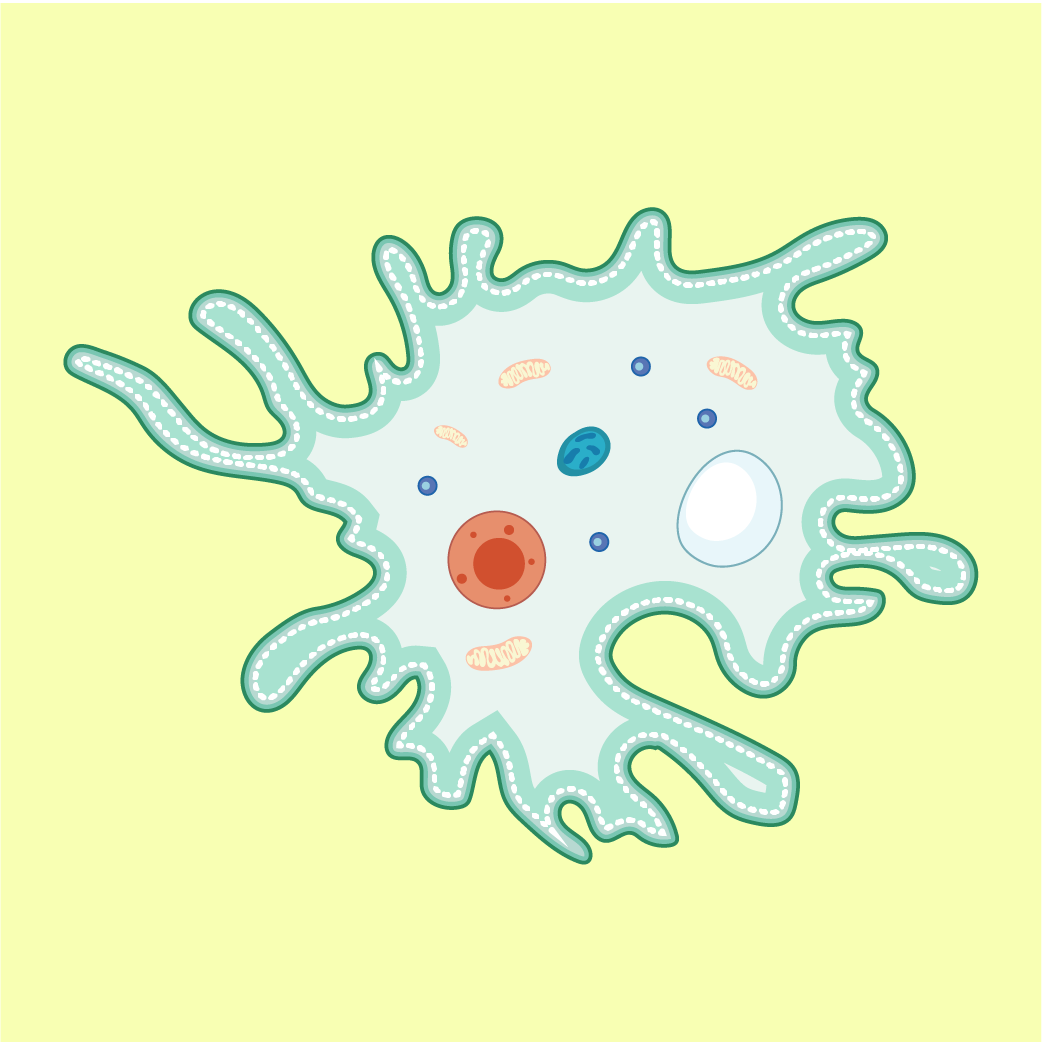
Cells are the fundamental building blocks of all living things. Just like individual hexagonal units join together to construct a honeycomb, billions of microscopic cells unite to form complex living organisms. Under a microscope, cells reveal specialised internal components known as cellular organelles, each performing specific life processes.
Learning Objectives
- Prepare and examine stained wet mount slides of plant cells (onion epidermal cells) and animal cells (human cheek cells) using correct techniques under a light microscope.
- Identify the cellular components of animal and plant cells as observed under a light microscope and through detailed diagrams.
- Describe the structures and specific functions of cellular components in animal and plant cells.
- Compare and contrast the structural components and storage materials between animal cells and plant cells.
Comparison of Plant and Animal Cell Ultrastructure and Staining Techniques
A side-by-side reference comparing organelles exclusive to plant cells versus animal cells, alongside the step-by-step irrigation staining technique.
Plant-exclusive
Cell wall, large central vacuole, chloroplasts in photosynthetic cells.
Shared organelles
Nucleus, plasma membrane, cytoplasm, mitochondria, ribosomes, ER, Golgi apparatus.
Animal-exclusive
Centrioles, lysosomes, small vacuoles or none.
Short Explanation
Living organisms are cellular entities
Under a light microscope, we can readily differentiate plant cells from animal cells using specific stains: iodine solution turns onion epidermal cell parts visible, whereas methylene blue clearly stains human cheek cell nuclei.
Shared essential machinery
The nucleus governs all cellular processes and houses DNA; mitochondria generate ATP energy via cellular respiration; ribosomes construct proteins; the endoplasmic reticulum and Golgi apparatus modify and transport vital biomolecules; and the plasma membrane selectively admits or expels substances.
Plant adaptations for support and nutrition
A rigid cellulose cell wall and a large central fluid-filled vacuole maintain turgor pressure to keep the plant erect, while chloroplasts harness sunlight to synthesise food.
Animal cell characteristics
Animal cells lack cell walls and chloroplasts, have flexible shapes, store excess carbohydrates as glycogen rather than starch, and possess centrioles to guide chromosome separation during cell division.
Slide preparation techniques
A wet mount is prepared by lowering a cover slip at a 45° angle to avoid trapping air bubbles. The irrigation technique draws stain across the specimen using filter paper.
Try to Answer First
Answer in your mind, then press “Check Answer”.
Why is it necessary to lower the cover slip at a 45° angle when preparing a wet mount slide?
What is the primary difference in function between the rough endoplasmic reticulum and the smooth endoplasmic reticulum?
Why do plant cells maintain a fixed shape while human cheek cells do not?
Common Mistakes
- Confusing the stains used in practical activities: using methylene blue for onion epidermis and iodine solution for cheek cells instead of the reverse.
- Stating that plant cells have no plasma membrane because they have a cell wall. Plant cells possess a plasma membrane located directly inside the cell wall.
- Confusing the roles of the rough ER (protein transport) with smooth ER (lipid synthesis and detoxification).
- Mistakenly stating that all plant cells contain chloroplasts. Chloroplasts are absent in non-photosynthetic plant parts such as underground onion scale leaves and root cells.
- Confusing carbohydrate storage forms: writing that plants store glycogen and animals store starch.
Concept Misunderstandings
Plant cells only have a cell wall and do not possess a plasma membrane.
Plant cells have both. The cell wall is a rigid, fully permeable outer layer, while the underlying plasma membrane is thin and partially permeable, regulating substance movement.
The cell wall controls what enters and exits the plant cell because it is on the outside.
The cell wall is fully permeable and allows almost all dissolved substances to pass through freely; the plasma membrane is the structure that controls selective permeability.
Every single cell in a plant has chloroplasts.
Chloroplasts are only present in cells exposed to light that carry out photosynthesis, such as leaf mesophyll cells. Underground storage tissues like onion bulbs and root cells do not contain chloroplasts.
Summary
- Cells are the structural and functional units of life.
- Wet mounts are prepared using mounting needles to prevent air bubbles; onion cells are stained with iodine solution, while cheek cells are stained with methylene blue via irrigation.
- Key shared organelles: nucleus (control centre/DNA), mitochondria (ATP generation), ribosomes (protein synthesis), endoplasmic reticulum (internal transport/lipid synthesis), Golgi apparatus (packaging/modifying proteins), and plasma membrane (selective permeability).
- Plant-exclusive features: rigid cellulose cell wall, large central vacuole with tonoplast, chloroplasts containing chlorophyll, and storage of carbohydrate as starch.
- Animal-exclusive features: presence of centrioles (spindle fibre formation), storage of carbohydrate as glycogen, flexible shape, and absence of cell walls and chloroplasts.
Short Activity
Objective: identify cellular components, their functions, and the differences between plant and animal cells.
A. Objective Quiz
Which organelle contains hydrolytic enzymes responsible for breaking down complex organic molecules, damaged cellular components, and bacteria?
A student prepares a slide of epidermal cells from an onion bulb scale leaf. Why are chloroplasts not observed in these cells under the light microscope?
B. Fill in the Blanks
The continuous process of drawing a chemical stain across a wet mount specimen using filter paper on the opposite side of the cover slip is called the technique.
The large fluid-filled sac found in mature plant cells is enclosed by a semi-permeable membrane called the .
C. Matching / Drag and Drop
Drag each cellular component to its correct description or function. On a phone, tap a choice first, then tap the matching box. Tap the Answer Choices area to return a selected item.
C. Match the Cellular Organelle to Its Function
Write the correct organelle next to each function.
| Function / Description | Cellular Organelle |
|---|---|
| 1. Site of cellular respiration that generates ATP energy through glucose oxidation | |
| 2. Modifies, packs, and sorts proteins and glycoproteins into secretory vesicles | |
| 3. Paired cylindrical structure forming spindle fibres during animal cell division | |
| 4. Synthesises lipids and carries out detoxification of drugs and metabolic by-products |
Answer choices: Mitochondrion • Golgi apparatus • Centriole • Smooth endoplasmic reticulum

